
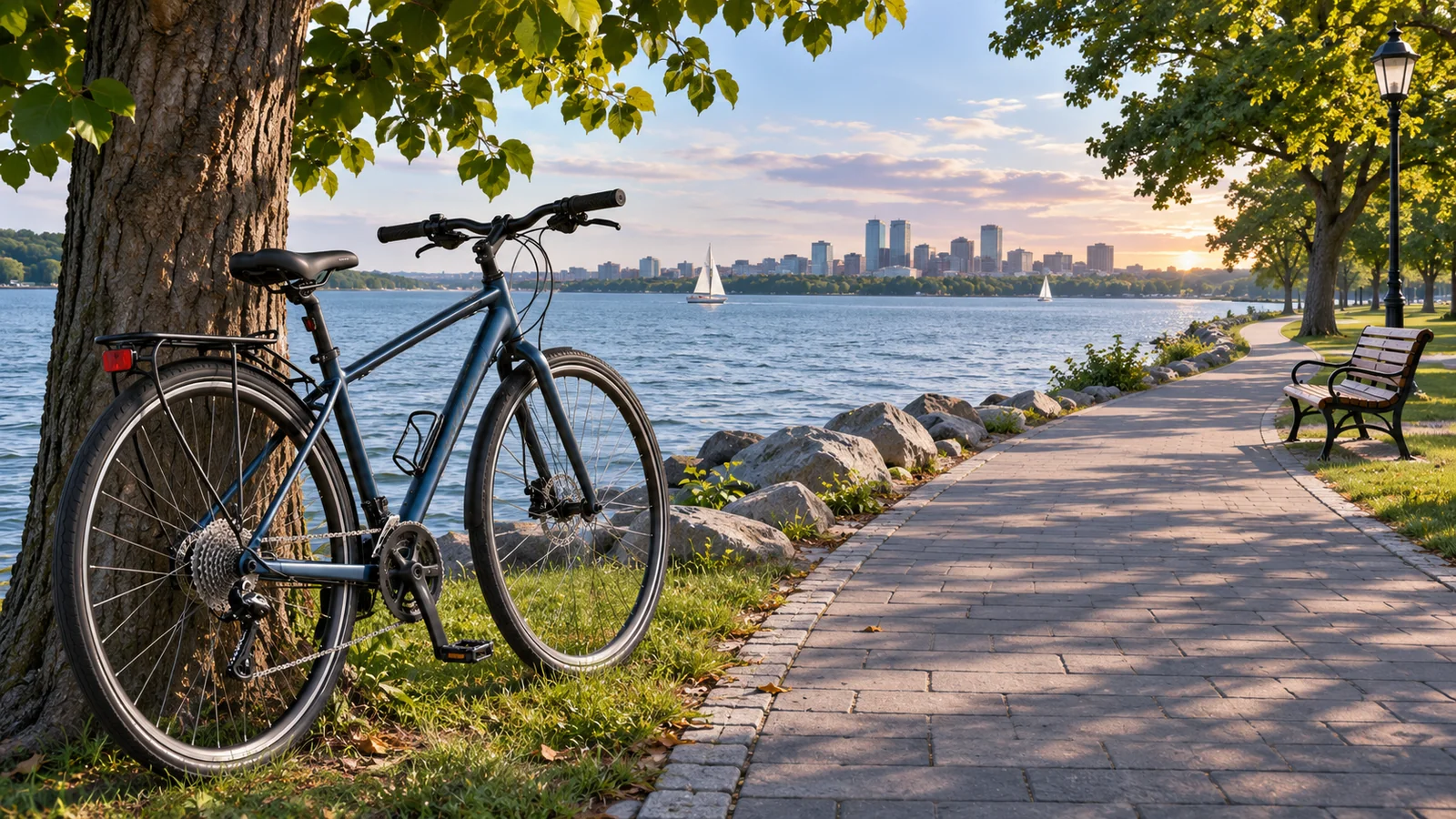
For a relaxed Campbell River waterfront ride, start at Rotary Beach Park and cycle an out-and-back section of the Rotary Seawalk. The paved route follows Discovery Passage, and the park has benches, picnic tables, washrooms and beach access. You can turn back when the wind picks up, the path gets busy or you reach the time you set aside for the ride. For a longer outing, use the City of Campbell River’s cycling information and parks map to choose a connection toward Willow Point or downtown. Check the path type for each leg so everyone in your group knows where they’ll share space with pedestrians or vehicles. City of Campbell River cycling information · Rotary Beach Park amenities
Choose a start that suits your riders
Rotary Beach Park makes a practical starting point for riders who want to spend most of their outing beside the water. Use the facilities at the park, check how busy the path is and agree on a turnaround before leaving. You can base that decision on time instead of distance. If the group wants a short ride, go far enough to find a comfortable place to pause, then retrace the same section. The route back is already familiar and you know where to finish.
Willow Point can work well if your group is already staying or eating in that part of town. Pick a specific starting landmark. Ken Forde Park is one of the shoreline parks marked on the City’s map, and its boat ramp means you may encounter vehicles and people moving equipment near the water. Check signs and the connection to the cycling route before riding away from the park. If you arrive by car, choose a space intended for your vehicle and leave the ramp approaches clear. City of Campbell River parks map · City of Campbell River’s Ken Forde Park page
A downtown start makes sense if you want to combine time on the bike with Discovery Pier or the attractions around the Government Wharf. Destination Campbell River locates the pier beside the wharf and describes the nearby waterfront path. Check how you will reach the part of the Seawalk you want to ride, and walk your bike through pedestrian-only or crowded areas where required. The pier itself can be a walking stop after you secure the bike where permitted. Destination Campbell River’s Discovery Pier guide
Pick a turnaround before setting a distance
Destination Campbell River’s cycling guide describes an approximately 13-kilometre round trip along the Rotary Seawalk. Other maps or guides may measure a different section. Treat that figure as an indication of the outing’s scale and measure between your own starting point and turnaround. A route from a hotel, parking lot or shop can add distance and road crossings that a description of the Seawalk alone does not include. Destination Campbell River’s cycling guide
For a short family outing, agree to reassess at the first comfortable stop. Let the youngest or least experienced rider set the pace. A path that feels easy in the outbound direction can take longer to ride back into the wind. Allow time for the group to start and stop together at crossings and for a short break off the path. Ending early can leave you enough time to sit by the water without rushing the return.
For a longer ride, choose a named point such as Rotary Beach Park or a Willow Point shoreline landmark and plan both directions from there. Identify where you might shorten the route if the path is busy or someone tires. Big Rock is a named landmark on the Seawalk, and the nearby boat ramp may be a useful point of reference. If using it as a meeting point, agree on a spot clear of launching and parking activity. City of Campbell River’s landmarks guide
Read the City’s cycling route types
The City distinguishes separated multi-use paths, bike lanes and neighbourhood routes on streets shared with vehicles. It lists the SeaWalk as an example of a separated multi-use path and identifies bike lanes along Highway 19A from Erickson Road to the Big Rock Boat Ramp. If a map shows a route continuing along the waterfront, check how it handles each intersection and whether the part you selected uses a bike lane or shared path. That detail is particularly useful for families and riders who want to minimise time close to traffic.
Entrances, driveways and boat ramps can make a short section feel more complicated than its distance suggests. Slow down before a crossing and look for vehicles moving in both directions. If the group would be more comfortable crossing on foot at a suitable crossing, stop in a place where you can gather without blocking the path. Use posted directions and lane markings even if a route app suggests a shortcut.
On the shared path itself, expect walkers, people with dogs and other riders moving at different speeds. Slow down where sight lines are short or the path narrows. Signal before passing, wait for space and leave room for someone who changes direction. If you stop to check a map or look out over Discovery Passage, move fully out of the travel line first. A busy waterfront can be easy to enjoy by bike when the group treats it as a shared place.
Plan the wind, stops and return together
Check conditions before setting off and feel how exposed the first stretch is. The breeze along the shoreline can be more noticeable than it was at your accommodation or parking spot. If you have a choice of direction, an outbound leg into the wind can leave an easier return. Keep layers handy if you will be sitting by the water, where the wind can feel cooler once you stop pedalling. A brief ride with a comfortable stop can work better than finishing a longer route in a hurry.
Rotary Beach Park is a useful picnic or rest stop because the City lists washrooms, benches and beach access. For a long ride, carry water and whatever food your group needs rather than counting on a specific business or seasonal vendor being open. If you intend to stop at a café in Willow Point or downtown, check its hours and pick a practical place to secure the bikes. A shoreline bench can make an easy fallback if the opening hours do not fit.
If your group is renting bikes, confirm where pickup and return happen and how much time you have. A route that begins near the rental shop can avoid a separate transfer. Ask whether the bikes suit the surfaces you plan to ride and whether locks are included. Work out how you will carry food, extra layers and any gear you need for later plans. For a short waterfront ride, a simple bag and a clear turnaround can be enough.
Add a waterfront stop without making it a long ride
A bike ride gives you a way to move between views of Discovery Passage. Stop at a bench or suitable pull-off to look for birds and boat traffic, then continue when everyone is ready. If you want to reach the shore from a park, leave the bikes in a permitted spot and follow the access route on foot. A paved path and the ground beyond it can have different conditions, especially where the shoreline is rocky or wet.
Downtown, you can make Discovery Pier or the Maritime Heritage Centre a separate stop. Leave enough time to walk between attractions, secure the bikes and check hours where needed. If a companion would prefer to walk, meet them at one landmark at an agreed time. A compact plan lets each person spend time on the waterfront at a comfortable pace. Eagle Eye’s guide to things to do in Campbell River
You can also build the ride around a picnic as the main event. Start at a park with amenities, make a short out-and-back ride and eat after you return. That keeps the food and spare layers close to the finish. If the water is particularly inviting, you have already reached a place where you can stop for longer without needing to negotiate another leg.
Fit a marine tour around the bike ride
If your day includes a marine wildlife tour, treat the operator’s check-in time as the fixed appointment. Plan the ride so that you can shorten it and still return the bikes, change layers and reach check-in comfortably. Confirm where the boat trip meets and where you can leave the bikes during it. Do not assume the nearest dock to your turnaround is the departure point or that bike storage will be available there. Eagle Eye’s Campbell River marine wildlife tour
With a morning departure, a short ride afterward lets you choose the distance based on how the group feels and what the weather is doing. With a later departure, start your ride near the place where you will leave the bikes and agree on a turnaround time before you pedal. Keep a spare layer dry for the boat. A waterfront cycle and a marine tour both put you in view of Discovery Passage, but they use different equipment and take different amounts of time to finish.
Match the ride to the people you are travelling with
If some people want to ride and others want to walk, choose a park with a meeting point and set an independent return time. Riders can cover a section of the Seawalk while walkers use a shorter stretch or stop by the water. Agree on the exact bench, entrance or picnic area where you will meet, especially if your group plans to leave bags or food with one person. This works better than having everyone try to match a single pace.
For a child who is comfortable on a path but less confident around other traffic, use the City’s cycling map to identify where the route changes before you leave. Be ready to turn around before the first connection the group would find difficult. An adult new to cycling can use the same plan. It gives the rider a chance to get used to shared-path traffic while retaining a familiar way back.
If everyone wants a longer ride, set a halfway decision point as well as a destination. Take a short break there to check time and conditions. That keeps a change of plan straightforward if the return will take longer than expected.
Frequently asked questions
Is the Campbell River Rotary Seawalk paved?
Destination Campbell River describes the Seawalk as a paved waterfront route. The City lists separated multi-use paths along it and identifies other types of cycling infrastructure on nearby roads. Check your chosen connections and signs before assuming each part of a longer ride has the same surface or traffic separation.
Where should a family start a short ride?
Rotary Beach Park is a practical option because it offers Seawalk access, picnic facilities and washrooms. Take a manageable out-and-back section and stop when you have enough time and energy for the return. If your family is staying in Willow Point, a nearer access point can simplify the day.
Do I have to ride the whole waterfront route?
Choose the section that matches your time and comfort level. Use a named turnaround or an agreed time, and measure the complete route from your actual starting point. The shorter ride can include the same shoreline views and a longer stop at a bench or park.
Can I cycle before a wildlife tour?
Yes, if the route, bike return and transfer leave enough time for check-in. An out-and-back ride is easy to shorten. Review the tour departure details and decide where your bikes will stay during the outing before planning to arrive by bike.