
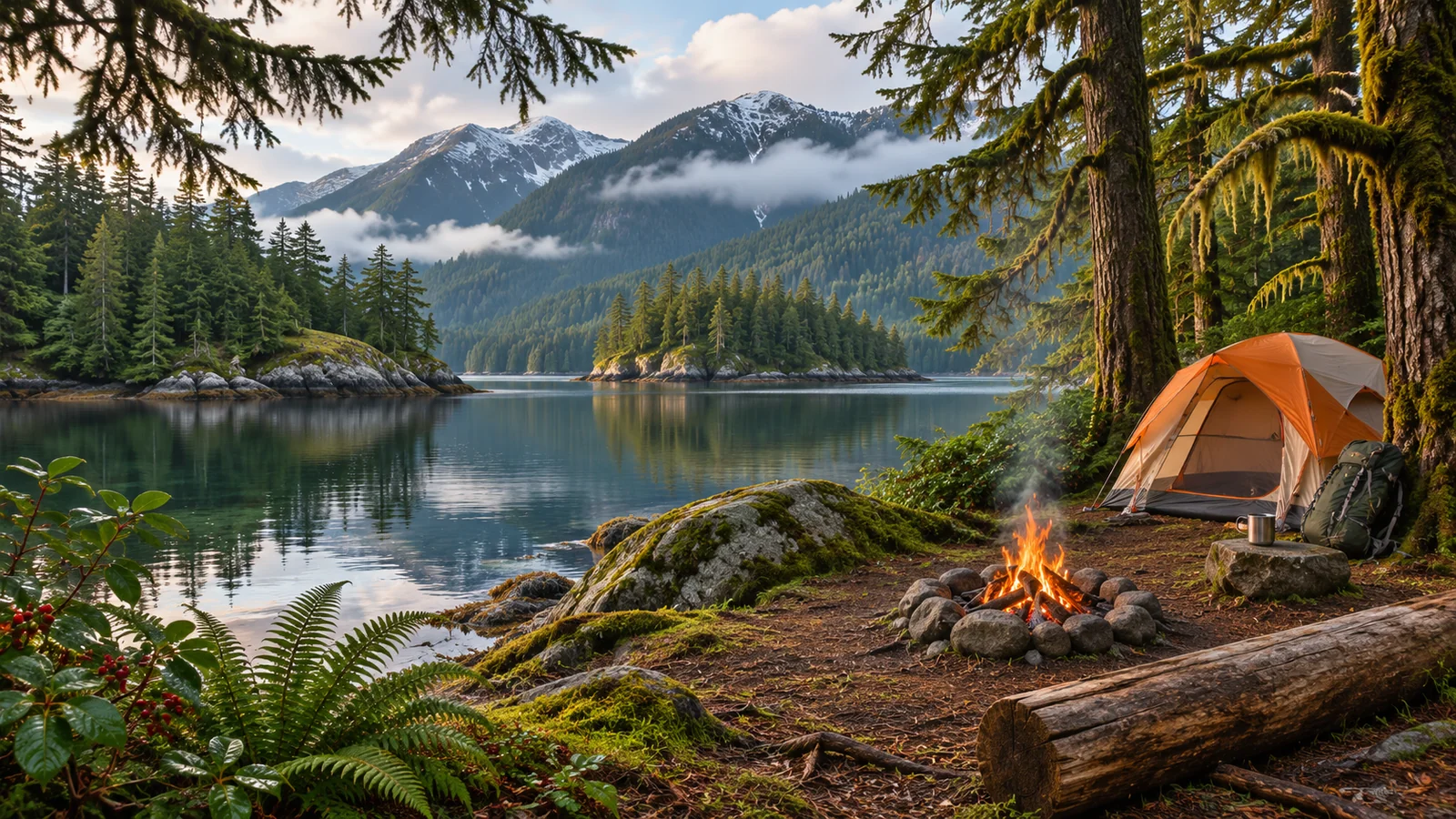
Morton Lake Provincial Park offers a small campground and sandy day-use beach northwest of Campbell River. Camp beside Morton Lake, use the separate launch on neighbouring Mohun Lake if you plan to paddle there, and consider the short trail to Andrew Lake. Check road conditions before you go. BC Parks directs visitors along gravel logging roads, and the park operator says sections can be rough. BC Parks Morton Lake Park · Morton Lake park operator
Get to the park using the official route
From Campbell River, follow Highway 19 north to Menzies Main. BC Parks directs visitors to follow the gravel Menzies Main for 12 kilometres, then take Morton Lake Road for another seven kilometres to the park. Save the route before travelling and follow posted signs and any current access instructions. The park operator describes the roads as maintained to an industrial standard and warns that they can be in poor condition. Conditions matter for the drive in and the return.
If you’re towing a trailer, look at your vehicle and setup in light of the road and your driving experience. Ask the operator about current reports when the condition of the road will affect your choice. If you’re renting, verify whether the agreement permits the approach. Follow signs and yield as directed around industrial traffic. The province’s guidance identifies rough surfaces, narrow sections and soft shoulders as common resource-road hazards. Leave time to use safe pullouts where needed. B.C. resource road safety
Check fuel and supplies before leaving town. Carry the route map, reservation and park contact where you can find them without reception. If you are travelling in separate vehicles, pick a place to regroup and give every driver the directions. A missed turn on the way to a lake can take time to correct, especially if a driver needs a suitable place to turn a larger vehicle.
Choose a campsite near the facilities you’ll use
The park operator lists 24 campsites along Morton Lake, including 14 reservable sites. Check the BC Parks reservation service for your dates, and confirm current operating dates and first-come, first-served arrangements before depending on them. Use the park map to compare where sites sit in relation to the beach, water, toilets and trail. A spot close to one of those features can be useful if the group plans to use it several times a day. BC Parks reservations · Morton Lake park map
Look at the actual dimensions and setup for the site before deciding what to bring. If you’re camping in a tent, check where you can put the shelter and how you’ll keep food secure. With a trailer, check the access and parking pad rather than relying only on its distance from the lake. If more than one household will camp, check occupancy and vehicle rules and agree where you’ll meet. Ask the operator if an accommodation or specific facility is important. BC Parks frontcountry camping
The operator lists pit toilets and a water hand pump during the operating season. It also describes limited-service winter camping. Confirm access, payment and available water for your dates. Bring water for arrival and plan to carry enough for the stay if the pump won’t be available. Check fire restrictions and what you’ll use for cooking. Set up for the facilities actually available rather than assuming summer services will be in place.
Use Morton Lake for the beach and picnic area
Morton Lake has a sandy beach and a day-use picnic area. The operator lists a parking area, picnic tables, change houses and pit toilets. Check which facilities are available for the season and look at the map before carrying equipment down to the shore. Give day visitors and other campers space to use the path. If you’re meeting someone at the park, identify the day-use area or campground site by name and number.
BC Parks says there are no lifeguards. If your group plans to swim, check conditions, keep close supervision around children and choose a route into and out of the water. If you’re using the beach to spend time by the lake, bring a layer for sitting and a dry set of clothes for swimmers. BC Parks requires pets to be leashed and excludes them from beach areas and park buildings. Plan a permitted walk if you’re bringing a dog.
Reach Mohun Lake for a different outing
The park includes all of Morton Lake and part of the shoreline on neighbouring Mohun Lake. The operator identifies a boat launch on Mohun Lake and BC Parks says that lake provides access to the Sayward Canoe Route. If you’re bringing a canoe or kayak, choose where you want to spend time before loading gear. Use the map and signs to locate the correct launch and ask about parking and access for the craft you’re bringing.
For a short paddle, choose a route that suits the wind and the group and leaves time to return to the same launch. Wear a properly fitted lifejacket or personal flotation device and check the equipment requirements for your craft. The full Sayward Canoe Route includes portages and takes its own planning. If you’ll be setting off from camp as part of that trip, use the route brochure and confirm where you can leave your vehicle and what arrangements apply at your finish. Transport Canada human-powered craft guidance · Recreation Sites and Trails BC Sayward Canoe Route map
Take the Andrew Lake trail from the campground
BC Parks describes a trail to Andrew Lake from across campsites 7 and 8 and gives about 30 minutes to reach the lake. Allow time for the return and for any stops you want. Follow the marked trail from the campground and check the conditions before continuing through any wet or rough section. A walk to Andrew Lake gives you time away from the beach and boat launch without committing to a trip on the water.
If you’re interested in the forest, BC Parks records a large fire in 1938 followed by replanting and natural regeneration. Use that history to look at the trees around the campground and along the path. Notice where the canopy changes and what grows closer to the ground. Keep to the trail and leave plants in place. Children can look for different bark patterns or listen for sounds from the lake as they approach it.
Plan a night or two according to the road and weather
For one night, check in and set up before deciding between the beach and the walk to Andrew Lake. If you’ve driven a long way, look at the lake and keep the paddle for a time when you can plan it properly. Cook and pack with enough daylight to get organised. Before the return drive, check that boats, camping gear and wet equipment are secured. Keep the road directions within reach.
For two nights, use the middle day to visit Mohun Lake or spend more time at the Morton Lake beach. Keep the Andrew Lake walk as an option if wind makes paddling unsuitable. If you’re meeting day visitors, agree on the activity and meeting place before they drive out. Visitors who want a shorter walk can join the group for a meal near the lake and leave before the rest go to the trail. Plan the return before the light or road conditions change.
Add a coastal outing on a separate day
Morton Lake gives you time in the freshwater lakes of the Sayward Forest. Eagle Eye Adventures offers a four-hour marine wildlife tour departing from Campbell River. If you book a tour, check the Coast Marina meeting point and arrival time. Schedule it before your camping trip or after you’ve returned to town if the road and packing would make the same day rushed. This leaves time for a paddle, a campground morning or a slower drive out. Eagle Eye Adventures marine wildlife tour · Eagle Eye Adventures contact and location
Which lake should I use for swimming?
The sandy day-use beach is at Morton Lake. Check water conditions and signs before entering. Mohun Lake has a boat launch and provides access to the Sayward Canoe Route. Keep the access plans separate if your group wants to do both.
Is Morton Lake a good choice for a first camping trip?
It can work if the site, road and limited facilities suit your group. Check the route and site listing, plan water and food, and choose a short outing for the first day. If rough gravel or a seasonal service closure would be a problem, ask the operator for current information before booking.
Decide what you’ll carry for a day away from camp
If you plan to walk to Andrew Lake, bring a map, water and the layers the group needs for the outward and return sections. Take note of the junction near the campground on the way out. If children want to take breaks, set a comfortable turnaround time and give them a chance to look around from the trail. If you want a shorter walk, you can use part of the route and return before reaching the lake. Stay on the marked trail and follow signs about access and wildlife.
For a Mohun Lake outing, pack according to the boat and forecast. Decide where you’ll stow equipment once you’re back at the campground and which dry items you want to keep with you until you’ve finished. If part of the group is staying at the beach, agree when you’ll return and where you’ll meet. Check the launch and parking in person before moving equipment. A quiet time on the shore can give you a good look at the lake before you commit to going out.
For a beach day, use a smaller bag with water, layers and anything you’ll need for a meal or change of clothes. Keep dry gear apart from wet items so it stays useful on the walk back. If the day-use parking area is busy, leave room for other people to unload and keep the main path clear. Choose a place to eat that suits everyone, including any person who wants to stay on a firmer surface.
Give the final morning a clear plan
Check the park’s checkout information and decide whether you’ll break camp before visiting the beach or do one short activity first. The final morning may involve more packing than expected if tents and gear are wet. Keep time to collect everything and see that the campsite is clear. If you’re taking a last walk, choose a route with a clear return and leave enough daylight and energy for the drive back to the highway.
After leaving, stop in town for a meal or a change of driver if that suits your onward trip. Allow for changes in road conditions if it has rained since you arrived. Keep your plans for the next booking or ferry separate from a best-case driving estimate. When people are travelling in more than one vehicle, share the destination before leaving the park so everyone knows how to get there. If you return another year, note which campsite worked, how the lake access felt and how much time the road took.
If you’re staying in the campground without a boat, the park still offers two distinct outings. Spend one block around the beach, picnic area and open water at Morton Lake and another on the forest walk towards Andrew Lake. If part of your group does have a boat, choose when to meet back at camp before they head to Mohun. That arrangement gives each person time for the part of the park they came to see without crowding everyone into one outing.