
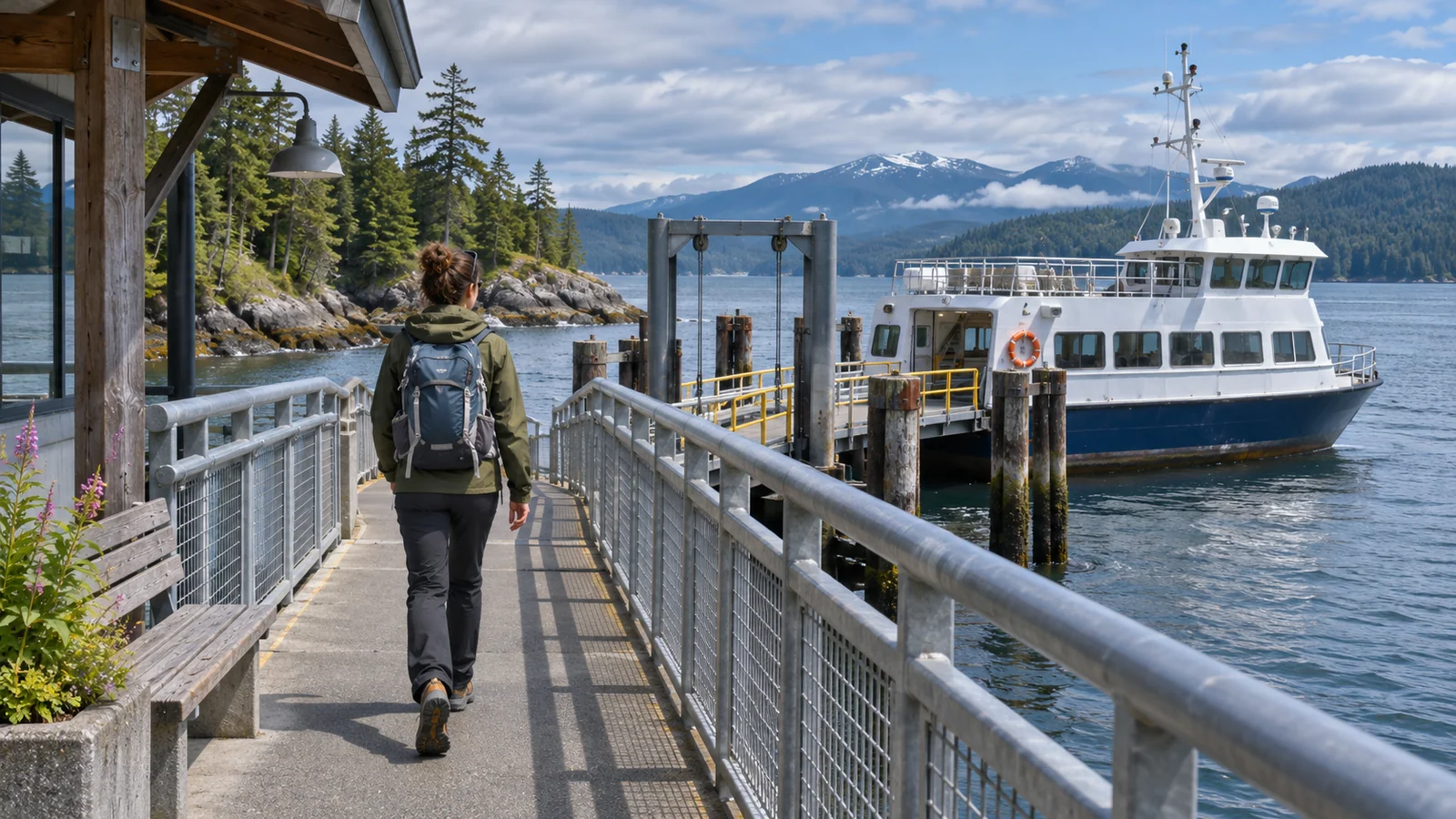
You can get to Campbell River without a car by flying into Campbell River Airport and arranging a ride into town, or by taking a foot passenger ferry to Nanaimo and continuing north by coach. Travellers already on Vancouver Island can also check BC Transit’s interregional connections. Compare the whole journey through to your accommodation, including the island-side transfer. Two ferries can both say “Nanaimo” and arrive at different terminals. A flight to Campbell River can land at the airport or at a waterdrome north of downtown. These details matter when you’re choosing a coach stop, arranging a ride or planning a wildlife tour check-in.
Pick the route according to where your trip starts
- Vancouver International Airport
Route to check first: Pacific Coastal flight to Campbell River Airport
Detail to verify before booking: Flight terminal, baggage rules and the ride into town - Downtown Vancouver
Route to check first: Hullo to Nanaimo and an IslandLink connection
Detail to verify before booking: Whether the advertised pairing runs on your date - West Vancouver or the North Shore
Route to check first: BC Ferries from Horseshoe Bay to Departure Bay, then coach
Detail to verify before booking: That the coach boards at Departure Bay and leaves after your sailing arrives - Nanaimo, Courtenay or Victoria
Route to check first: IslandLink where available, or BC Transit’s regional connections
Detail to verify before booking: Stop locations, days of operation and the last viable connection - Powell River
Route to check first: Ferry to Little River, then ground transport through the Comox Valley
Detail to verify before booking: How you’ll reach the onward stop from the ferry terminal
Check the return trip before buying the outward ticket. Sunday and holiday service can differ from a weekday. If you arrive on a service with an easy connection, you may find that the reverse direction leaves at a less convenient time. Write down the actual departure and arrival locations for both directions and compare them with where you’ll stay. BC Ferries schedules and booking · IslandLink Bus · BC Transit interregional connections
Fly into Campbell River Airport and book a ride into town
Pacific Coastal lists flights to Campbell River Airport, identified by the code YBL. If you’re connecting from another airline in Vancouver, confirm your departure terminal, how to get there, and whether you must collect and recheck baggage. If you book the flights separately, ask what happens if your incoming flight runs late. Give yourself time for the terminal transfer before committing to the shorter connection. Pacific Coastal
Campbell River Airport lists taxis and an airport shuttle among its ground transportation options. Confirm your pickup and drop-off address with the provider, especially for an early departure, a late arrival or a group travelling with bulky bags. A ride to your hotel and a ride directly to the marina are different trips. Save the address and booking contact in case your flight time changes. If you need an accessible vehicle, ask the provider about the type of mobility equipment it can accommodate. YBL ground transportation
If you’re starting downtown Vancouver, check Harbour Air’s seasonal service to Campbell River as another option. Its Campbell River base is the waterdrome at 2870 Spit Road, identified by the code YHH. Plan the transfer from that address and check the operator’s current dates, baggage allowance and boarding requirements. The waterdrome and YBL are separate arrival points, and each calls for a different pickup arrangement. Harbour Air
Comox Valley Airport is another gateway if its flights fit your plans. Start with the airport’s ground transportation page and build the rest of the trip from the terminal. Some onward buses leave from Courtenay or another stop in the Comox Valley. A flight arriving in Comox and a bus leaving Courtenay are only a practical pairing once you’ve figured out the trip between the two. Compare that transfer, the wait and the total fare with the YBL option. YQQ ground transportation
Take a foot passenger ferry to Nanaimo and continue by coach
If your plan uses BC Ferries and IslandLink, check the Horseshoe Bay to Departure Bay route first. IslandLink identifies Departure Bay as a connector for foot passengers arriving from Horseshoe Bay. In Metro Vancouver, TransLink’s route 257 connects downtown Vancouver with the Horseshoe Bay terminal. On Vancouver Island, match the coach boarding point in your reservation to the ferry terminal. BC Ferries’ Tsawwassen service to Nanaimo uses Duke Point, which needs a separate transfer plan if your onward coach leaves elsewhere. BC Ferries foot passenger check-in · TransLink
From downtown Vancouver, you can also check Hullo’s partnership with IslandLink. The operators advertise select connections from the Hullo Nanaimo terminal to Parksville, Courtenay and Campbell River. Use the pairing they list for your travel date and confirm the booking steps for each leg. The Hullo terminal and BC Ferries’ Departure Bay terminal are separate locations. If you’re combining operators outside their advertised connection, check where you’ll transfer and how much time you’ll have to do it. Hullo and IslandLink
Keep a gap between your ferry arrival and coach departure. Consider disembarkation, walking to the pickup point and any baggage you’re handling. Check what the coach operator requires at boarding and how it handles a missed connection. A small bag you can manage by yourself makes a walk-on trip much simpler. If you’re bringing a bicycle, oversized camera case, stroller or mobility aid, confirm each carrier’s policy before paying. A ferry ticket and coach ticket can have different rules even when the services are listed together.
Use regional transit if you have time for transfers
BC Transit publishes an interregional itinerary between Victoria and Campbell River. It lists the bus routes, transfer points and fares by transit system. The northbound trip from the Comox Valley includes a connection at Oyster River. Start by choosing the date, then match each service to the next using the timetable. Check both the time and the stop name. A regional pass may cover one segment while the next operator or service charges a separate fare.
If you start in Nanaimo or Courtenay, begin with the part of the itinerary that serves your location. For a Victoria departure, compare the regional buses with a shorter transfer plan built around a coach or an overnight stop. A journey with several short waits can become an all-day trip if one connection runs infrequently. Bring water, have a food stop in mind, and check where you can wait under cover if the weather turns.
From the Sunshine Coast, check the Powell River to Little River sailing with BC Ferries. Work out the land leg from Little River before you buy a ticket. The ferry arrival alone does not tell you whether a coach or local transit connection will work. Use the actual terminal address to see where your pickup or first bus stop is. If your sailing arrives after the last connection you can use, arrange a ride or change the itinerary. Town of Comox travel information
Compare the full journeys before buying tickets
Put the options side by side from the same starting point. For a flight, count the trip to the airport, check-in, the flight itself and the ride at the other end. For a ferry and coach, count the trip to the terminal, the sailing, the wait in Nanaimo and the coach ride. Compare arrival times at your room or the marina. If you live near Horseshoe Bay, the ferry route may require fewer local transfers than it does for someone already at Vancouver International Airport.
Decide where you can recover from a missed connection. If a planned coach is your last viable northbound service, check whether you’d rather pay for an earlier crossing or have a place to stay in Nanaimo if the sailing is delayed. If you’re weighing a cheaper late flight against an earlier one, price the onward ride at the hour you’d land. Make the same comparison in reverse if you have a fixed flight home.
For a group, give one person the confirmed stop or terminal address for every leg and share it before you split up. If two people are meeting at a terminal after travelling separately, agree on the pickup area or ticket hall by name. This is especially helpful in Nanaimo, where the terminal name tells you more about your connection than the city name on the ticket.
Make the last leg to your room or the marina easy
Check the distance from your actual arrival point to your accommodation. A listing described as being in Campbell River may still require a bus or taxi to reach the central waterfront. If walking is part of the plan, look at street crossings, gradients, baggage and the time of day as well as distance. If you’ll use a local bus, check the stop in both directions. For accommodation outside the centre, confirm the first and last services around your tour time. Campbell River bus routes · Destination Campbell River travel information
Eagle Eye Adventures lists its departure address at Coast Marina, 1003 Island Highway, Unit D. Compare that address with the meeting location in your confirmation. If you plan to go straight to the tour after arriving in town, ask where you can leave your luggage before boarding. Your accommodation may be able to hold it before check-in if you ask. If you need a taxi after the tour, arrange a pickup location that you and the driver can both identify. Eagle Eye Adventures marina directions · Contact Eagle Eye Adventures
A four-hour wildlife tour can fit into a day with onward travel when you have a comfortable margin after the expected return. Start with the bus departure or airport check-in, then subtract the ground transfer, time to collect bags, and a buffer for delays. That gives you the latest comfortable time to be back at the marina. Compare it with the time shown in your tour booking. For an early departure, travelling to Campbell River the previous evening can simplify both the journey and the morning. Eagle Eye Adventures four-hour wildlife tour
Practical questions before you book
What if my ferry or flight is delayed?
Check the carrier’s current status first. Contact the next operator as soon as you know you could miss the connection, and use its instructions to change or rebook the leg. Keep confirmation numbers and contact details available offline. If a late arrival would make you miss your wildlife tour check-in, call the tour operator as well. A backup plan could mean a later coach, an arranged ride or a night on the Island before continuing.
Is a car-free trip cheaper than renting a car?
Compare total fares for everyone in the group. Add the coach or flight, both local transfers, any baggage fees and the cost of an overnight stop if the timetable makes one necessary. Then compare the rental price including fuel, parking, any extra driver fees and the ferry vehicle fare if you would drive from the mainland. Location matters too. A room within walking distance of meals and the marina can reduce the number of paid rides you need.
Can I include Quadra Island without a car?
BC Ferries connects Campbell River with Quathiaski Cove on Quadra Island. If you’re going as a foot passenger, choose an island destination based on a confirmed onward connection or a walking route you’ve checked, and look up the return sailing before you leave. Plan this as its own outing if you have a fixed wildlife departure or onward coach that day. Quadra Island ferry status
What should I save before I set out?
Keep your ferry terminal names, coach stop, flight codes, pickup address, accommodation and tour meeting point together. Include the latest check-in time for every booked leg. Save a map of the short walks and screenshots of bookings in case you lose service or have to find a driver in a busy pickup area. Once each transfer has a place and a time, you can compare the route options and choose the one that leaves you enough time to enjoy Campbell River.