
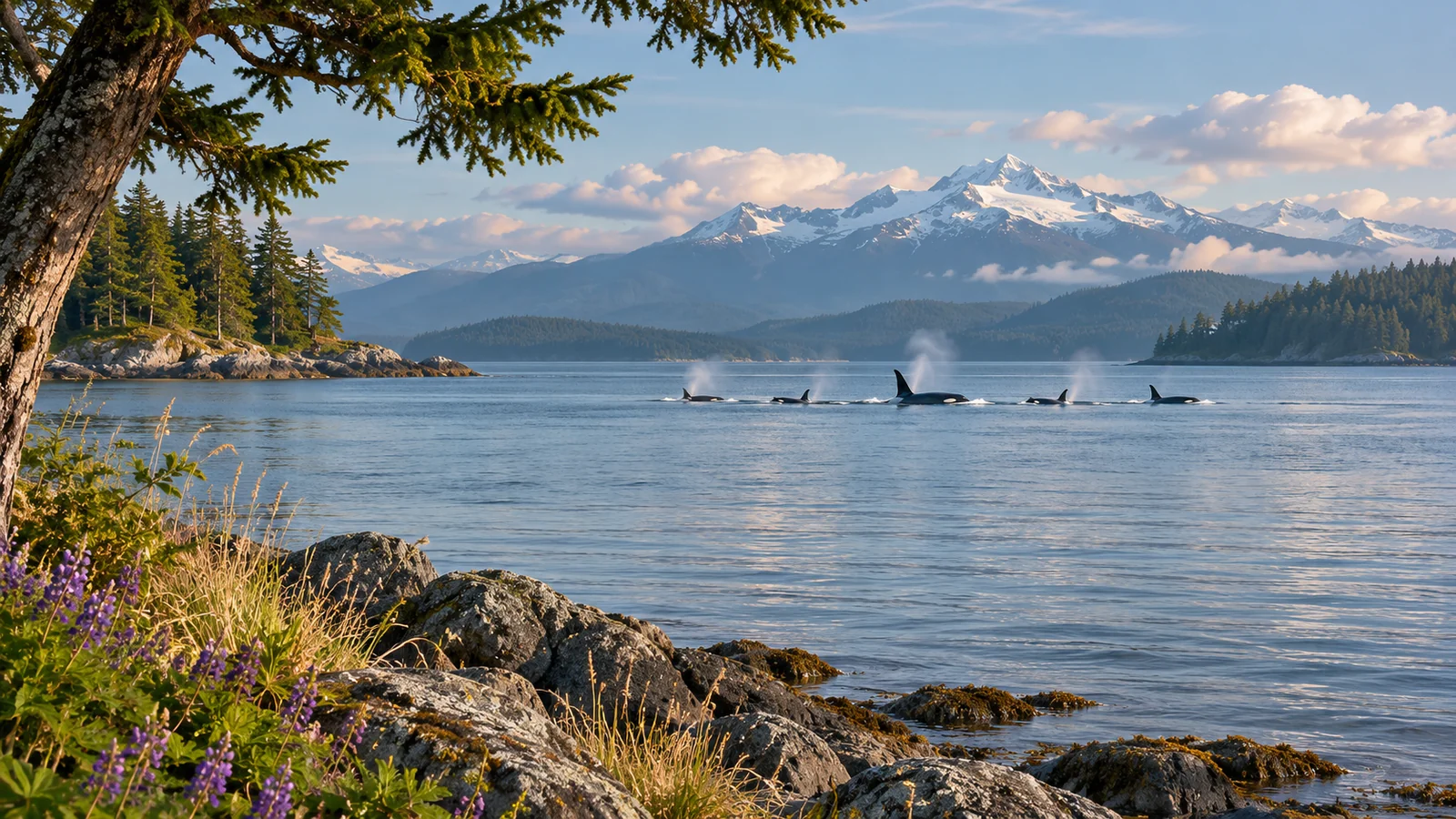
Scientists measure killer whale recovery by following a defined population over time. They look at how many whales are alive, which calves survive, how deaths and births affect the age structure and whether the population can use the habitat it needs. They also track pressures such as prey availability, noise and contaminants. A good year or a new calf is meaningful. Recovery is a longer question about whether the population can persist and meet the objectives in its recovery plan. When you see a claim about progress, check the population, the period and what the source actually measured. Canadian resident killer whale recovery strategy
Start with the population and its recovery objectives
Northern and Southern Resident killer whales are separate fish-eating populations. Their geographic ranges overlap, but their social groups, histories and status differ. A result for one cannot be used as a result for the other. Recovery documents state which population they address and what outcomes they seek. Read those objectives before interpreting a trend in encounters or a headline about orca numbers.
A recovery goal can involve more than an increase in the number of animals. The Canadian strategy addresses population and distribution, food supply, disturbance and contaminants, and protection of critical habitat. Those are related parts of the problem. A population can be measured directly through individual monitoring. Some threats require different records, such as fish surveys or acoustic measurements. An action plan can turn the strategy into specific work while leaving longer-term population results to be assessed over time. Canadian action plan implementation report
The relevant authority matters as well. Canadian and U.S. documents may describe the same whales while addressing different areas, legal measures or reporting periods. Compare their definitions and dates before treating two results as inconsistent. Whales travel across the border, but the agency document covers the work it was designed to report. NOAA Southern Resident recovery programme
Follow births, deaths and survival over several years
A new calf is one of the most visible signs of change. Researchers identify the mother, record the calf and look for it in later encounters. The birth adds information to the family record, while later observations tell researchers whether the calf survived. An announcement about one calf is therefore the start of a record. It should be read alongside other births, losses and the quality of the monitoring for the period. Canadian killer whale status assessment
Deaths and absences also need context. An animal can go unobserved because it is outside the survey area or because the team could not photograph every member of the group. Over time, repeated coverage and records of known families can help researchers assess whether a missing individual is likely to have died. A source may distinguish a confirmed death from an inferred one. That distinction helps readers understand how a count was assembled.
The age and sex structure can tell researchers more than the total alone. Two populations of the same size could have different numbers of breeding-age animals and young whales surviving into later life. They may also differ in which family lines are represented. A small increase in one year can be encouraging while leaving the long-term outlook uncertain. Check whether the report discusses these details alongside the total.
Distinguish a census from a population trend
A census attempts to account for individuals in a defined population. Researchers can use photo identification to connect a whale's dorsal fin and saddle patch with earlier records. When a population is well studied, those records can show which animals were present and which calves were added. Coverage can differ among populations and years. COSEWIC describes more complete annual photographic coverage for Southern Residents than for Northern Residents in some years.
A trend involves comparing results over time. If methods and coverage are comparable, repeated counts can help show whether the population has generally grown, declined or stayed near the same level. If the method changes, look for an explanation of how the numbers can be compared. A new estimate may cover a different area or use a different definition. A trend is stronger when it is based on more than two isolated figures.
It also matters which period you select. A population can increase in a short interval within a longer period of decline. A longer record can reveal that change, and a recent period can show whether the direction has shifted. Check what question the authors set out to answer. When sharing the result, say whether you are describing the latest count, a short-term change or a trend over many years.
Track the conditions that can influence recovery
Prey is one part of the picture. Both resident populations depend heavily on Chinook salmon. Researchers can measure aspects of prey abundance, distribution or quality, and compare them with whale diet and feeding conditions. A salmon count in one river gives different information from a study of prey captured by whales at sea. When a report says prey conditions improved, check which fish, places and times it covers. Eagle Eye's orca diet guide
Vessel noise and disturbance can affect how animals use areas and carry out activities. A measure to change vessel operations may be evaluated using compliance data or underwater sound measurements. A research study might also examine what whales did under different conditions. These observations can help explain progress without serving as a direct count of whales. The results are easiest to interpret when you know whether the programme measured the action, the environmental change or the behavioural response. NOAA Fisheries on vessel noise and prey capture
Contaminants are another concern. Researchers can sample whales, prey and parts of the environment to assess exposure. A reduction in a source may take time to show in a food web, and older animals can carry the effects of earlier exposure. If a report describes a change, look for the substance and sample that were measured. Several pressures can act together, so a result about one threat may be useful even when it cannot explain the whole population trend.
Separate an action completed from an outcome observed
An implementation report can describe work that was done, such as monitoring, research, habitat protection or measures aimed at reducing disturbance. That information tells you whether people carried out part of the plan. An outcome assessment asks what changed afterwards. The time between an action and a measurable change can differ depending on the work. A measure affecting vessel activity may be tracked quickly, while survival and reproduction need a longer record.
For example, a report might say that researchers installed recording stations. That is a completed action. The stations may later provide a record of underwater sound or whale calls. Those recordings are evidence about conditions or presence. A separate study may ask whether any change in those conditions affected feeding. The three findings can work together. The first one alone does not establish the third.
The same principle applies to habitat. Identifying a location in a strategy gives it a formal role in recovery planning. Monitoring can show how whales use it and what pressures are present. Whether the habitat is supporting the population as intended requires evidence about the conditions and activities the whales need. Look for the link between the work completed and the outcome claimed.
Read a recovery headline with three checks
First, confirm who the result concerns. Is it Southern Residents, Northern Residents, an ecotype across a broader area or a particular family? Next, confirm the observation period. A calf sighting, a year-end census and a multi-decade trend are different time scales. Finally, check what was measured. A vessel count, sound recording, salmon survey and survival estimate describe different pieces of the problem.
Suppose a headline says whale sightings increased this summer. Ask whether survey effort also increased, whether the same animals were seen more than once and which population was identified. More observations can provide useful evidence that the area was used. They do not necessarily show that the population grew. A population assessment needs records of individuals and methods suited to the question.
If a report uses the word progress, read the sentence around it. The progress might be in completing a conservation measure, filling a research gap or changing an indicator. That can be valuable in its own right. A stronger statement about recovery should connect the evidence to the population objectives. Keep the scope when describing it to someone else.
Work through three examples of progress
One calf was added to the census. The birth shows that the researchers identified a new animal in that population. It contributes to the demographic record. Ask whether the census also recorded other births, deaths or absences, and whether the calf was seen again. A new calf can be a meaningful event even in a year when the overall total changes little. The long-term question depends on survival and reproduction across the group.
A monitoring programme found lower noise under certain conditions. That result can indicate an improvement in the acoustic setting during the period measured. Ask where the recorder was, what sound the team measured and how traffic and conditions differed. Then look for research that connects the change with the animals' activities. A result about sound levels can be useful before a measurable change in population size appears.
A salmon project restored habitat used by a prey stock. Check which stage of the salmon's life cycle the action addressed. A project can report a change to habitat, then track how fish use it over time. To connect that result to the whales, researchers may need evidence that more of the relevant fish became available to them in places they feed. Each step has its own time scale. The habitat improvement can be reported on its own without assuming the effect on whales has already been measured.
When the reports are read together, they can describe work completed, changes in environmental conditions and longer-term outcomes. If one part of the chain has yet to be measured, say which part. That helps you recognise progress while keeping the population question open until the evidence supports a conclusion. Keep the date and population beside the finding so readers can compare it fairly.
Frequently asked questions
Does a new calf mean the population has recovered?
A birth is important, but recovery depends on what happens across the population over time. Researchers look at whether calves survive and how births, deaths and the age structure change. A single observation cannot answer those questions.
Is the biggest population count always the best measure?
Use the count that matches the population and period you want to understand. A higher figure can come from a different method or more complete coverage. Compare the definitions and uncertainty before treating a difference as growth.
Can a population benefit from a measure before the total changes?
Yes. A measure may improve an aspect of habitat or reduce a threat before a change is visible in births and survival. Check the evidence for the particular benefit and keep it separate from the long-term population result.
Can I see recovery on a Campbell River wildlife tour?
A trip can give you a view of animals and habitat at a particular time. Ask the guide what they know about the individuals and how researchers follow those whales across years. The encounter is one observation within a much longer record. Eagle Eye's Campbell River orca guide
On a Campbell River whale watching trip, listen for the difference between what the crew observed that day and what long-term records tell us. Both have a place in understanding how a population is doing. Eagle Eye six-hour whale watching tour