
Vessel noise can make it harder for killer whales to detect the sounds they use to find prey. For fish-eating residents, noise can overlap the echoes that return after they send out echolocation clicks. Researchers using tags on Northern and Southern Resident killer whales have linked higher vessel noise to reduced efficiency or success at stages of salmon hunting. The effect depends on what the whale is doing and what sound reaches it. A passenger hearing little engine noise above the surface does not know what the whale is hearing underwater. Primary tag study · NOAA Fisheries research explanation
What underwater noise can interfere with
A resident killer whale searching for a salmon can send out clicks and listen for their echoes. The echoes can carry information about a possible target. If another sound overlaps them, it can make those echoes harder to distinguish. Researchers call this masking. The term describes an interference problem, not a statement that the animal stops hearing altogether. The strength, timing and frequencies of the signals matter, as does the position of the sound source.
Imagine trying to pick out a quiet voice while several people nearby are speaking. You might hear the voice at some moments and lose the words when another sound overlaps it. The comparison helps explain why a sound can be present and still be hard to use. The situation underwater is more complex because whales are moving, sending signals in particular directions and listening for returns from moving targets.
Sound can also serve social purposes. Killer whales use calls, and different resident groups have recognised call patterns. A result about the loss of useful prey echoes does not automatically tell you how the same noise affects every call. When reading a report, check what sound was studied and what behaviour the authors measured. Masking during hunting and disturbance of a resting or travelling group can be related concerns, but they are different observations. NOAA killer whale science
How researchers measure the whale's experience
A hydrophone at a fixed location measures what reaches that receiver. It can help describe how sound changes in a waterway over time. A recording tag attached to a whale measures sound and movement close to the animal for a shorter period. Researchers can use the tag record to compare ambient sound, echolocation and movement during a possible hunt. It gives a different view from listening from a boat or standing on shore.
The team can then look at stages of a search. A whale may click while searching, move towards a target and make a rapid sequence of sounds near a possible capture. Movement and sound data help researchers interpret those stages. They also have to decide what evidence supports a successful capture and what only supports a pursuit or attempt. A study that reports effects on efficiency and success usually explains how the authors distinguished those outcomes.
There are limits to what any one tag records. The team sees a portion of the whale's day and compares it with observations from other animals and encounters. Vessel positions, fish movements and the animal's own choices can vary. Check which groups and settings were included before extending the result to another population or a different kind of hunt. The study of resident salmon hunting tells us about that context. It provides a question for other groups, rather than an automatic answer about them.
What the resident killer whale study found
Tennessen and colleagues analysed records from Northern and Southern Resident killer whales to study how vessel noise related to stages of foraging. They found effects consistent with auditory masking that reduced hunting efficiency or success in the animals studied. Their analysis also reported differences by sex in parts of the response. These are patterns across records and circumstances. They should not be read as a prediction that every male or female responds the same way each time a vessel passes.
For example, a whale may produce more searching signals in noise and still have difficulty progressing to or completing a capture. A person watching the surface may see the animal dive and later reappear. That view offers little information about the effort between those moments. The tag data help researchers ask which part of the process was affected. This is why studies can find a meaningful difference even when observers above the surface see little change in the whale's movements.
Keep the result tied to the actual outcomes measured. It is more informative to say that noise was associated with impaired foraging stages in the study than to say that a whale cannot eat when a boat is nearby. The study does not set one noise level for all whales in all places. It strengthens the case for paying attention to the sound the animals experience while trying to use their habitat.
Why a busy channel can sound different below the surface
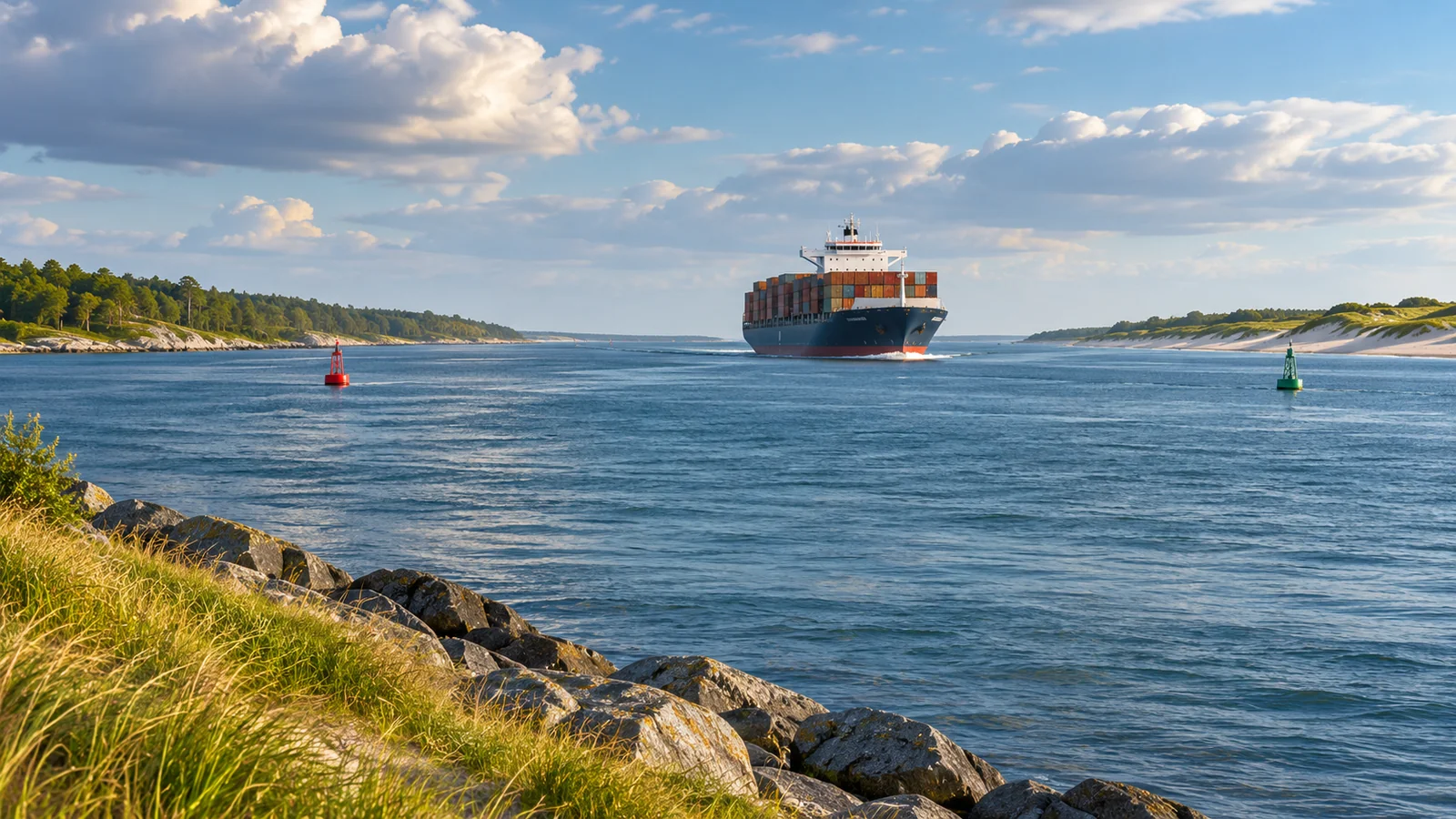
A coastal waterway can contain vessel traffic, wind and waves, rain and sounds made by animals. Underwater sound can arrive from outside a passenger's immediate view. A vessel you can see may contribute to the sound, while another farther away may also be detectable. Sound received at a particular location depends on how it travels through the water and on the conditions at the time. A view from the surface captures only part of the setting.
Duration matters as well as the loudness of a single moment. A brief passage through an area can have a different effect from repeated traffic during the time whales are searching. A hydrophone record across a day can help describe how conditions changed. To learn about the effect on whales, researchers need information about the animals and what they were doing during those periods. The sound record and the behavioural record complement each other.
When comparing two studies, check whether they measured a sound at a fixed station, close to an animal or from a vessel. A measurement from one position cannot be used as the exact sound level experienced everywhere in the area. If the comparison concerns a group of whales, look for how the study linked the recording to the actual encounters. Those details make the findings useful for management rather than just making the sound seem more dramatic.
How quieter conditions fit into conservation
Northern and Southern Resident killer whales rely heavily on Chinook salmon. Recovery work also addresses disturbance and underwater noise, contaminants and other threats. The presence of prey does not settle whether a whale can find and catch it efficiently. Likewise, reducing disturbance does not create a prey supply. The actions address related parts of the challenge. Canadian resident recovery strategy
When an agency introduces a vessel measure, read what it is meant to achieve. A measure may create more space around whales, reduce exposure in a particular area or guide the way vessels operate under specified conditions. Check the current requirements before planning independent boating. Rules and management measures can depend on the location, species and time. Use the current official guidance for the water you are entering. Fisheries and Oceans Canada marine wildlife viewing guidance
On a guided trip, let the captain make decisions about the vessel and the encounter. Listen to the guide's explanation if the crew pauses, moves away or changes the viewing plan. If they use a hydrophone, ask what the recording can tell them about sound at the receiver. Do not assume that a quiet speaker means the surroundings are quiet for the whale. Eagle Eye's ethical whale watching guide
Read a noise result with the question it answers
If the report is about sound levels, look for the device, location and time period. If it is about behaviour, look for how researchers measured searching or prey capture. If it is about population recovery, look for the much longer record of survival and reproduction. A single measurement does not answer all three questions. When the studies agree, they can help describe a chain of evidence from sound exposure to possible consequences.
Consider a hypothetical encounter in which a boat passes and a whale stops making clicks that the receiver can detect. The whale may have stopped clicking, the boat sound may have masked the clicks, or the whale's position may have changed. Another instrument or a movement record might help distinguish the possibilities. The important result comes from comparing the evidence across many encounters, not from guessing why one sound disappeared.
Compare sound exposure before and after an operating change
Suppose a research programme wants to evaluate an operating change in a busy waterway. A useful starting point is to compare sound measurements before and after the change while noting the types of vessels, traffic levels and weather. If the sound level is lower on a particular day, there may also have been fewer vessels or different conditions. Records over a longer period can help explain whether the operating change is responsible for some of the difference.
The next question is whether the change matters to whales. Measurements may show that less sound reaches one part of the waterway. A behavioural study would need to look at the animals using that area and what they did under the conditions. The animals may be present at some times and absent at others. If a report compares feeding activity, look at how researchers identified feeding and accounted for differences in prey or group composition. The sound measurement alone cannot settle the behavioural question.
Consider where you would expect the strongest evidence. A receiver can detect a change close to a busy route, while a tag can help show what an individual whale experienced as it moved. Observations can connect those measurements with visible activity. If all three point to the same explanation, the case is stronger. If they differ, the differences can show which part of the question needs more work. Keep the outcome in view when reading about a new measure. A quieter soundscape, improved opportunities to catch prey and population recovery are related goals, with different evidence for each. Check which result the authors report.
Frequently asked questions
Does every boat sound affect whales the same way?
No. The sound a whale receives depends on the source, the distance, the conditions and the frequencies involved. The effect also depends on what the whale is doing. A study can describe patterns for a particular population and activity while leaving other situations open.
Does a whale that keeps swimming mean it was unaffected?
A surface view gives limited information about the sounds the animal can hear or the effort it is putting into finding food. Researchers use tools such as acoustic and movement tags to study those questions. An obvious reaction is only one possible kind of evidence.
Can a hydrophone tell me what the whale hears?
It records sound at the receiver. That can help you learn what sounds are present in that location. A whale elsewhere can receive a different mix of sound. Study designs that put a recording device near the animal provide a different kind of evidence.
What can I do on a wildlife tour?
Follow the crew's directions and leave the viewing position and distance to them. Ask how the boat's operation fits the current guidance. If the guide describes an acoustic observation, ask how they know what made the sound and what remains uncertain.
On a Campbell River tour, you can learn about the underwater soundscape even when the hydrophone is quiet. Ask how the guide thinks about sound, prey and the space the animals need to continue their activity. Eagle Eye Campbell River whale watching