
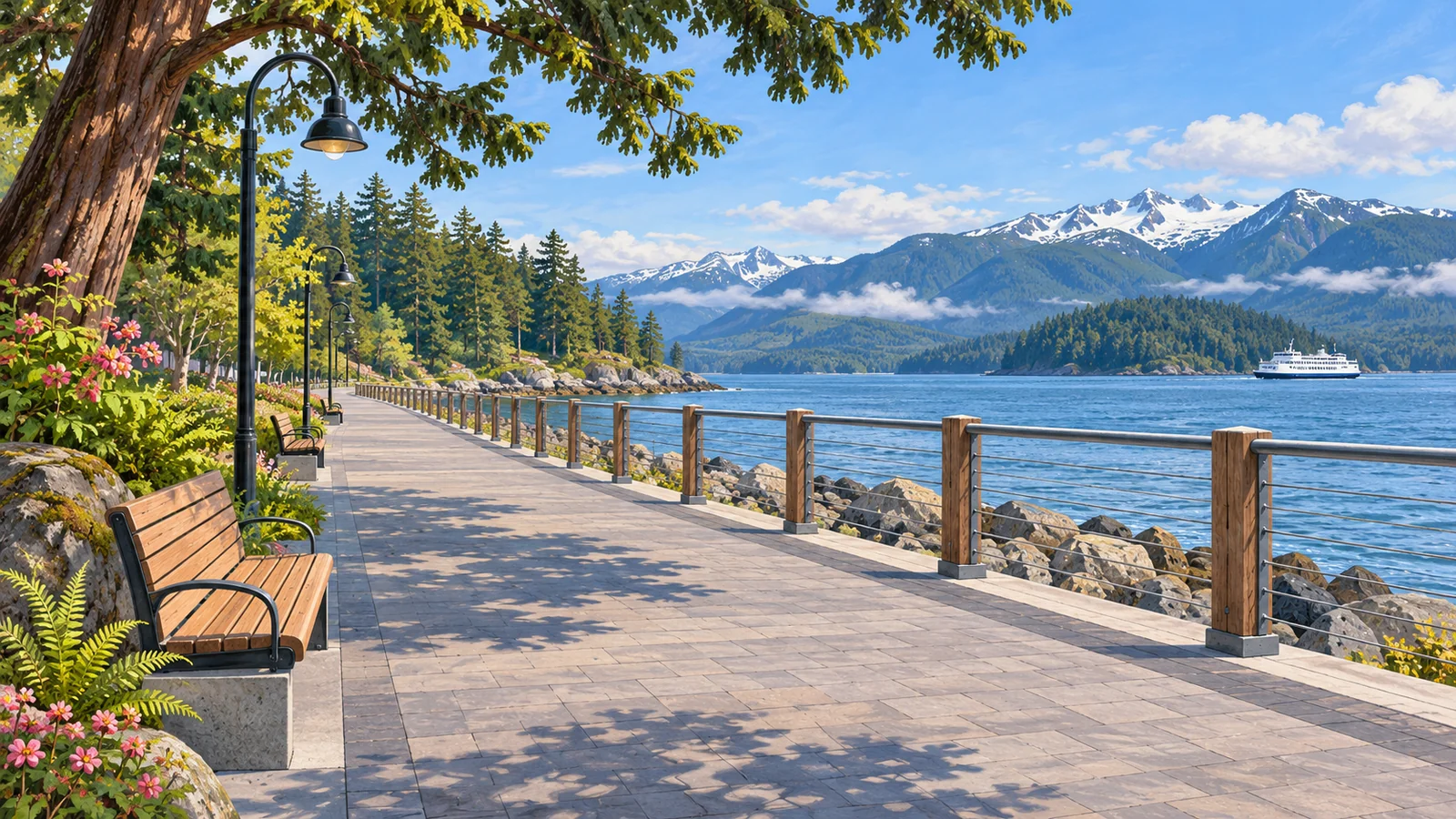
Start with one Campbell River waterfront stop and check the complete route from your arrival point to the view and back. Discovery Pier and the adjoining visitor area are useful places to look at first. Rotary Beach Park and a section of the Rotary Seawalk offer another option if the entrance and path suit your group. Ask about surfaces, slopes, curb cuts, seating and washroom access before travelling. A step-free visit depends on more than the path itself. A short walk can be the easier choice when you know where to park, which crossing to use and how to return if conditions change.
Choose the access point first
Use the City of Campbell River’s parks and trails listings and maps to find the attraction you want and the nearest public access. Start at the place you’ll actually leave the vehicle, get out of a taxi or step off the bus. Follow the route from there to the spot where you want to sit or look out over the water. Check each transition, including the edge of a parking lot, a crossing or the start of a boardwalk. These short links can determine whether the rest of a route works. City parks and trails directory · Campbell River parks map
If you’re choosing a route for someone else, ask what a suitable visit looks like for them. One person may want a firm path without steps and be comfortable with a moderate slope. Another may need a shorter distance, room to turn or a washroom they can reach independently. Ask what surface they can use, how far they’d like to go, and whether they want a sheltered place to rest. Then compare those requirements with the information you can confirm.
- Arrival
Ask about: Accessible parking or a lawful drop-off point and room beside the vehicle - Route to the water
Ask about: Curbs, slopes, cross-slope, surface changes and crossings - Viewing area
Ask about: A view from seated height, room to turn and seating for companions - Washroom
Ask about: Opening hours, entrance route and the facilities you need - Return
Ask about: A short way back and a place to wait if the group separates
Look at Discovery Pier and the visitor area
Discovery Pier is beside Government Wharf in central Campbell River. Destination Campbell River lists benches and covered areas on the pier and describes a shared visitor area with the Discovery Passage Aquarium and Maritime Heritage Centre. The City lists the pier at 655 Island Highway. Use that address as a starting point when checking the parking, drop-off and pedestrian approach. Ask about current access before relying on it. Discovery Pier visitor information · City Discovery Pier information
Decide how much of the pier you want to visit. A look out from near the entrance may be enough if the wind is strong or you only have a short window. If you’re going farther, check how the surface and width feel as you go. Give anglers room, especially when they’re handling lines. When the pier is busy, choose a spot where your group can pause without narrowing the space other visitors use. Plan the return route before everyone settles.
If you’re adding the aquarium or Maritime Heritage Centre, confirm each venue’s own entrance and hours. Nearby attractions can share a visitor area while having different doors, thresholds and washrooms. Call the venue if you need to confirm a transfer or an accessible washroom. The aquarium’s public visiting season changes with the year, so verify the public schedule before relying on it as the indoor part of the visit. Discovery Passage Aquarium · Maritime Heritage Centre
Choose a short section near Rotary Beach Park
The city lists Rotary Beach Park along the waterfront and includes the Seawalk in its parks information. Use the municipal map to identify a section you want to try from one access point. Check the walk from parking, the slope into the path and the return. If you’re considering beach access as well, check that separately. The route along the shore and the route down to the beach can require different levels of effort and have different surfaces. City Rotary Beach Park information · City trails map
An out-and-back visit lets you adjust the length once you’re there. Pick a first place to pause and decide whether to go farther after reaching it. Notice whether your return will be into the wind, whether the surface is wet and where you can leave the path if you need to. If someone uses a manual chair, ask how the slope and distance feel in each direction. If someone tires easily, the distance from the turnaround to a seat or the vehicle can matter more than the length of the whole walk.
The city has published an older accessibility audit of selected parks. It can help identify questions about the route and facilities, but current access should be confirmed with the city or venue. Surface work, parking arrangements and closures can change. Check current city notices and have a second public stop in mind if the first entrance doesn’t work for your group. City parks accessibility audit · City traffic updates
Confirm parking, transit and washrooms as separate details
If you need a designated parking space or an adjacent clear area, ask where it is and how the path reaches the waterfront from there. For a taxi, agree on a place where you can safely get out and meet the driver again. A short distance on a map can include a parking aisle or a crossing. Ask about that specific route if it affects whether you can reach the stop. If you’re driving with companions, decide how to meet after the driver parks.
If you’re using the bus, check the exact stop and direction. Look at the walk from the stop to the waterfront and the return stop as well. BC Transit publishes accessibility information for riders and route maps for Campbell River. If you use a mobility aid, check the guidance for your device and ask about the stop you intend to use. Choose a return time that leaves enough room to reach that stop without rushing. BC Transit accessibility · Campbell River bus routes
Ask whether the washroom will be open and whether the approach meets your needs. A venue can be within view and still be hard to reach from the path. If a confirmed washroom is essential, put it early in the route or use the venue as the starting point for your visit. The Museum at Campbell River publishes visitor accessibility and washroom information. It is at 470 Island Highway, separate from the pier visitor area, so confirm the route before combining the two. Museum at Campbell River visitor information
Turn the access check into a short route you can use
For a pier visit by car, choose a confirmed parking or drop-off point first. Then identify the entrance you’ll use, where the group can stop for a view and where you’ll turn back. If you’re adding a museum, make a second plan from the same arrival point to that venue’s entrance. A short walk between stops can be practical when you’ve checked it in advance. If there’s a different crossing or slope, decide whether you’d rather move the vehicle or visit only one place.
For a waterfront outing by bus, start with the stop that gives the most workable approach. Check the route in both directions and allow time to rest before the bus arrives. If you’re coming from a hotel or accommodation, ask whether staff know a route that avoids the sections you’re concerned about. Verify what they tell you against the current map or city information. Staff may be able to describe a crossing in more detail than a routing app can.
Have one place you can reach comfortably if the group wants to shorten the walk. That might be a bench near the start, a public indoor venue or a place where you can meet an arranged ride. If someone needs a seat with a particular height or armrests, ask about those details. A generic listing for benches only tells you that seating exists.
Check boat boarding separately from the waterfront walk
If you’d like to add a wildlife outing, check the tour page for the departure and then talk to the operator about boarding. Eagle Eye Adventures describes a wheelchair boarding option on its covered boat for guests who can transfer to a vessel seat. Ask what the route to the seat involves on your departure, what assistance is available, where a chair can be stored, and how you would reach the washroom or deck. Explain your own requirements in concrete terms. The dock approach, the transfer to the seat and access during the trip are separate questions. Eagle Eye Adventures fleet information · Eagle Eye Adventures contact
Eagle Eye Adventures lists Coast Marina at 1003 Island Highway, Unit D. If the four-hour marine wildlife tour is part of the visit, use your confirmation to verify the meeting point and check-in time. Leave enough time to get from your ride or parking to that point. Choose a short waterfront stop before boarding only if you know the route and can return comfortably. A longer stop can wait until the tour is over. Eagle Eye Adventures marina directions · Four-hour marine wildlife tour
Build a fallback around the same part of town
If the wind is strong, the path is crowded or a parking space is unavailable, keep the alternative close. Try a shorter look at the water from an access point that works, or use an indoor venue you’ve already confirmed. If the group wants to stay near the pier, check whether the maritime centre or aquarium is open and whether its entrance works. If you choose the museum farther along Island Highway, plan the transfer rather than assuming you can walk there. Eagle Eye Adventures Campbell River activities
If part of the group wants a longer walk, choose a place to meet where everyone can get to the washroom, sit or reach the vehicle if they need to. Agree on the time before splitting up. If a person is using equipment with a battery, leave enough range for the way back and an alternate route. A backup works best when everyone knows where to go and can manage the return at their own pace.
What should I ask when I call a venue?
Describe the route you want to use and the equipment or assistance that matters. Ask how to get from the parking or drop-off point to the entrance, whether the whole route has steps, and where you’ll be able to turn or rest. Ask about the washroom by name or location if there’s more than one. Confirm the answer for your travel date and note who can help if the setup differs when you arrive.
Can I plan a shorter visit for someone who avoids stairs?
Yes. Choose an access point with a confirmed route and pick one place to look out over the channel. A short stop near a bench or a return point can work well. If the person wants to continue after reaching it, check the next stretch and how far it is back. Add a meal or indoor visit only if the route and entrance are suitable. Eagle Eye Adventures outdoor activities guide
How do I deal with an access change on the day?
Check official notices and follow signs at the site. If you can’t confirm a safe alternative route, choose your backup stop. Call the venue if you need to know whether an entrance is still usable. For an arranged ride, give the driver a new pickup point only once you know where you can wait comfortably. A visit that starts and ends at a workable access point gives you more freedom to decide how long to stay.