
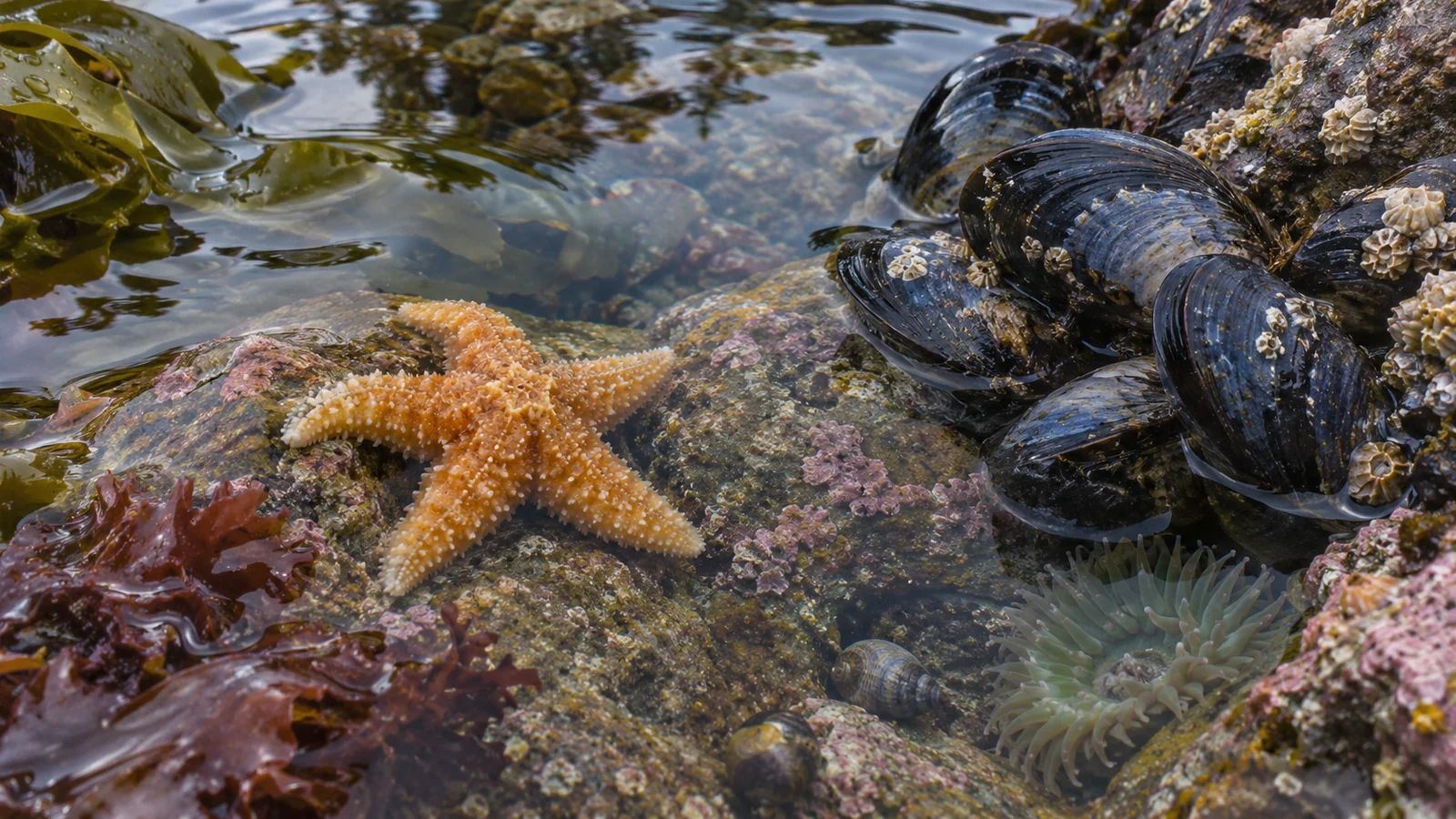
Discovery Passage Aquarium is a seasonal, hands-on aquarium at the base of Discovery Pier in Campbell River. Its exhibits introduce animals and habitats from the waters around the city, and its collect-and-release model returns specimens to their collection areas at the end of the season. It works well as a focused waterfront stop, particularly if you want children to see the smaller creatures they would have trouble spotting from a pier or boat. Check the aquarium’s own opening notice before you go. Its Explorer Lab operates separately, so a lab programme announcement does not necessarily mean the public aquarium is open. Discovery Passage Aquarium
Find the aquarium and plan your arrival
Head to 621 Island Highway and look for the small blue building at the base of the fishing pier. The Maritime Heritage Centre is next door. If you arranged an Explorer Lab activity, look for the lab across the parking lot, south of the heritage centre entrance. Before you set off, check your confirmation for the meeting point. A group can easily split up if half the visitors use the aquarium address and the other half head straight to the lab door. Aquarium directions and contact information
Choose a practical meeting point if some of your group is arriving on foot and others are driving. The aquarium entrance works when everyone knows which building to look for. The entrance also gives a family a place to reunite after a washroom stop without asking the whole group to move. If you are dropping someone off, make sure they can identify the entrance they intend to use and avoid treating the general map pin as the end of the trip. The final few metres matter when a stroller, walker or tired child is involved.
The aquarium lists a rear entrance from the pier ramp for visitors using a wheelchair or stroller. It directs visitors to accessible public washrooms on the pier near the concession, including a baby change table. The washrooms are separate from the aquarium, so consider using them before admission when travelling with small children. If you need specifics about ramp grades, turning space or how an activity is set up, contact the aquarium directly and describe the detail that affects your visit.
Check whether the public aquarium is open
The aquarium generally operates between spring and fall. Its homepage posts the current seasonal status and also lists private group bookings that can affect a drop-in visit. Start there, then look at the admission information and the hours that apply to your date. If the waterfront visit is the main reason for your trip downtown, check again on the morning you plan to go. An old visitor guide can still be helpful for finding the pier, but it cannot confirm that a building is open that day. Admission information
For an off-season visit, decide what you want to do before assuming the aquarium is your indoor backup. A booked lab activity has its own arrangements, and the aquarium’s site describes lab uses such as school visits and birthday parties. If you are simply looking for an indoor place to visit, check the Maritime Heritage Centre or the Museum at Campbell River on its own schedule. Eagle Eye’s rainy-day ideas for Campbell River can help you choose a backup with a different focus.
Leave some room in your schedule for the group to go at its own pace. An adult who wants to read every label will spend time differently from a toddler who wants to return to one tank. You can agree to begin together and give everyone a chance to point out one thing they want to see again. If the group is also headed to a timed activity, settle your departure time before you go in. That leaves the visit feeling open while giving the person managing the schedule a clear point to check the clock.
If you visit with a classroom or youth group, give participants one observation to bring back rather than a list of animals they must find. They could compare the surfaces two animals occupy, or describe the route one animal takes through a tank. Have each person record what they saw before sharing an explanation. Back outside, compare the observations and consider which questions could be answered from a public walkway and which would need another look inside.
Understand collect and release
The aquarium collects representative local species in spring and returns them to their collection areas at the end of the season. This gives visitors a window into nearby waters and means the living collection belongs to a particular season. Ask an interpreter which habitats the current exhibits represent. Knowing whether an animal normally lives on exposed rock, in a sheltered pocket or beneath the surface can explain more about its appearance than a name alone.
A display is a useful place to examine details that are easy to miss at the shore. Looking through glass can let you get level with an animal and see the side you would usually miss when looking down from above. Start by finding where its body meets the rock, sand or water. Watch whether it stays put, travels across the surface or shelters under something. Then read the label or ask an interpreter to help you connect the behaviour with the habitat. The important part is seeing what the animal is doing before trying to name everything around it.
Take the same approach if children ask why a creature seems to be doing nothing. Give it a short period of quiet observation and see what changes. An animal may shift position slowly, move a small part of its body or become easier to see when you change your own angle. If you cannot tell whether you are looking at a moving animal or its surroundings, that is a useful question for an interpreter. A child who notices one detail and asks about it has already found a way into the visit.
Make the hands-on visit useful for your group
Let the staff explain how to interact with each exhibit before touching an animal or putting a hand in the water. The aquarium offers hands-on learning, but which interactions are available depends on the exhibit and the staff’s instructions. If someone would rather watch, they can try describing what they see to a companion. Ask where an animal is attached, which way it is facing, or what part of the tank it seems to prefer. Observation gives everyone a role, including visitors who are hesitant about touching unfamiliar creatures. Discovery Passage Aquarium’s approach to interpretation
For mixed ages, pick a simple question that everyone can answer differently. What did you notice about the way an animal moves? A young child might point to the movement, while an older child can compare two species or explain why a particular movement would be useful on a rocky shore. Adults can use the same question to find out which exhibit caught the children’s attention. If you want a record of the visit, write down the animal’s name as it appears on the label. That is easier to look up later than a guess based on colour.
People visiting with a group that needs more structure can contact the aquarium about a programme before arriving. The lab and the public exhibits serve different purposes, and a planned session can have different activities from a drop-in aquarium visit. Ask what is included, where to meet, how long the session lasts and what accommodations can be arranged. Give staff a specific question or request, such as whether a participant needs a seated activity or advance notice of anything they are expected to touch.
Look at the waterfront after the exhibits
Step out to the pier when the weather and your plans allow. Look first at the transition between land and water. A rock that is wet on one side and dry on the other, a sheltered pocket behind a structure and open water farther out offer very different conditions for the organisms that live there. Notice how much of the shore you can actually see from the public walkway. What is hidden by water is part of the habitat, even when you cannot see the animals using it.
If you later visit a local beach, let the aquarium experience shape how you observe it. Look from a place you can reach easily and keep your footing on firm ground. Watch water in shallow pools before deciding what is living there. There is no need to pry an animal loose or carry it away to see it better. A sketch or a photograph can preserve the detail you noticed while leaving the animal where it lives. If you are planning a separate shore outing, ask staff what tide and access information you should look up for that beach.
The sea also looks different from a boat. You will spend more time scanning open water and the shoreline, where surfacing animals and birds may be visible while the small creatures from the exhibits are mostly out of sight. The two perspectives fit together when you are curious about how local waters work. Eagle Eye’s marine wildlife safari explores the region from the water. Use the tour description to see which outing fits your group and the Coast Marina directions to plan the separate transfer.
Questions visitors often ask
Does admission include the Explorer Lab?
Check which experience you are booking. The aquarium lists the lab as a separate space, with activities such as field trips and birthday parties. If you want a particular lab activity, confirm its date, eligibility and meeting point with the aquarium before leaving home. Do the same if you are relying on a lab visit outside the public exhibit season.
Is it a good fit for children who do not like touch tanks?
Yes, if they enjoy looking closely at animals or asking questions. Let them choose an exhibit, give them time to watch, and ask if they would like help finding the animal on the label. A child who is interested in one small creature may stay engaged longer there than they would moving quickly through the entire room. Plan for a short visit if your group has limited time, and keep a pier walk or another waterfront stop flexible.
Can we see the aquarium and take a wildlife tour on the same day?
Yes, when the aquarium is open and your booking leaves a comfortable window. Put the boat check-in and departure times in your calendar first. Work backwards to allow for leaving the aquarium, getting to the marina and following your operator’s arrival instructions. If you only have a narrow gap before departure, put the aquarium after the boat ride or use a different day. This gives you time to ask a question at an exhibit without watching the clock.
Is the aquarium worth visiting without a boat trip?
A visit stands on its own if you want to learn about local marine life. Pair it with time on the pier or another stop nearby if you have the afternoon. Choose one thing to look for outside, such as the edge where waves meet rocks or the difference between sheltered water and water farther out. Even when conditions limit your view, you will have a clearer picture of where the animals you just saw spend their lives.