
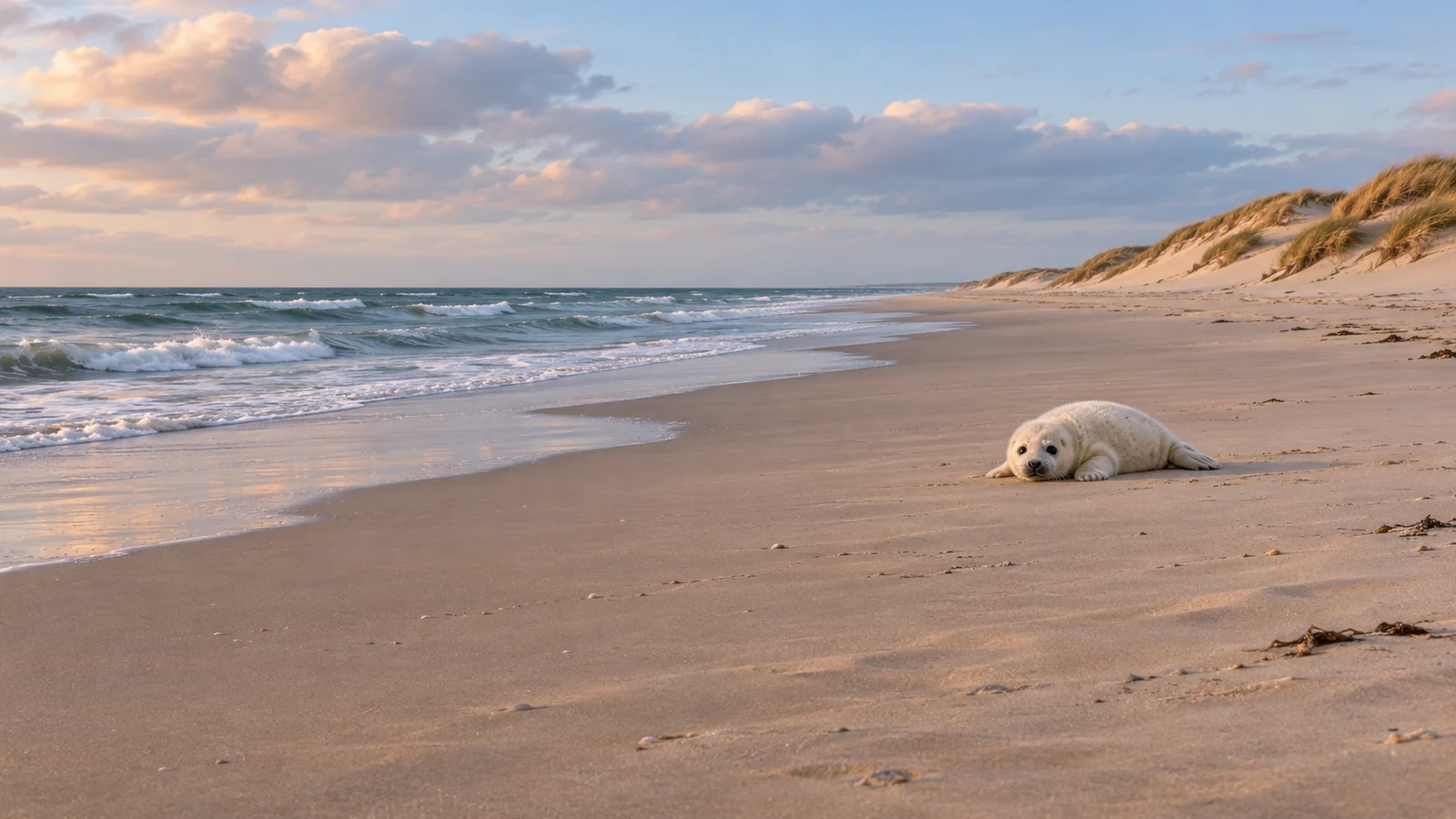
If you find a seal pup alone on a British Columbia beach, move back, keep children away and leash your dog. Leave the pup where it is. Its mother may be foraging or waiting for people to leave before returning. Do not touch, feed, wet or push the seal into the water. If it appears injured or in distress, call the Fisheries and Oceans Canada Pacific reporting line at 1-800-465-4336 for direction. DFO also lists the Vancouver Aquarium Marine Mammal Rescue Society at 604-258-7325 for a seal believed to be injured or abandoned. Describe what you can see from a distance and let trained responders decide what to do. DFO seal pup guidance · DFO Pacific reporting line
Give the pup space first
A seal lying above the waterline can look as if it is in the wrong place. Harbour seals use land as part of their normal lives, including for resting, giving birth and nursing. A pup on shore can be doing exactly what it needs to do while its mother is out of view. The most useful immediate action is to increase the distance between people and the animal. That gives the pup room and helps avoid making the shore less accessible to a returning adult.
If you were walking towards the animal, stop and change your route so you can pass well clear. Keep your group together, and make sure children know to stay with you. A dog can run towards a pup before a person has time to respond, so use its leash and take it away from the immediate area. If you cannot pass without crowding the animal, turn back. Keep the path between the pup and the water clear and avoid surrounding it with people.
The same principles apply if you notice it from a boat, dock or a viewpoint above the beach. Do not adjust your position to get a closer look or a better photograph. If you are on a tour, alert the crew and follow their directions. A useful report can begin with an imperfect view. You do not need to see the pup’s eyes, touch it or establish which species it is before asking for advice.
Why being alone does not establish abandonment
A mother seal can be in the water while her pup is ashore. DFO explains that she may be foraging or may have been scared away by people. A person arriving midway through that separation will see the pup alone without seeing how it got there or what will happen later. Remaining near the pup to wait for proof can add disturbance and make it harder for a returning mother to approach. Step away first, even if you are concerned.
Consider what one brief observation can establish. You can say you saw a small seal at a particular place and that you did not see an adult while you were there. You might also know whether it moved, whether people were nearby or whether any obvious material was wrapped around it. Those are useful details. The observation alone gives you little information about whether the mother had been nearby earlier or was still somewhere out of sight.
Young seals can enter water early in life. That does not mean a person should try to make one swim. DFO specifically advises against moving a seal, pouring water on it or forcing it into the water. Moving a pup could separate it from the place where its mother expects to return. A person can also be bitten or accidentally injure the animal. Leave handling to trained responders.
When to call and what to say
Report visible injuries, distress or harassment
If you have reason to believe a seal is injured or in distress, call the DFO Pacific reporting line at 1-800-465-4336. DFO lists the same line for reports of marine mammal disturbance or harassment. Its seal-specific guidance also lists the Vancouver Aquarium Marine Mammal Rescue Society at 604-258-7325 for a seal believed to be injured or abandoned. If you are unsure what you saw, describe the signs instead of assigning a diagnosis. The person receiving the report can direct you on whether anything further is needed.
An animal lying still on a beach is not by itself evidence that it needs help. An obvious wound, visible entanglement or people harassing the seal gives a clearer reason to contact the reporting service. Keep your own safety in mind if someone else is close to the animal. You can ask them to give it room if it is safe to do so, or notify the people responsible for the site. Do not put yourself between the seal and the water or try to intervene physically.
Describe the location and the observation
Start with where and when you saw it. If you are on a public beach, give the beach name, the nearest access point and a description that will help someone recognise the part of the shore. If you have an approximate location on your phone, share it without walking back towards the seal to refine it. Say what the seal was doing and whether other animals, people or dogs were nearby. If you noticed an injury or material around the animal, describe what was visible and which parts of the view were unclear.
A photograph can help when it was already taken from a safe position. Keep the original and send it if the reporting service asks. A wider frame can help with the location and conditions, even if it is less clear about an injury. Do not try to get a close view. Report the limits of your information and follow any instructions about where to wait or whether to leave. Your role is to make a useful observation and reduce disturbance around the animal. DFO marine mammal incident guidance
How to respond when others arrive
A crowd can form quickly when one person stops to look. Someone arriving later may assume the first person has already called. Another visitor may see the pup’s position and decide it needs to be moved. If you are able to speak to the group safely, explain that seals commonly rest on shore and that the mother may return after people move away. Ask people to keep dogs and children clear. Then make space yourself. A simple explanation paired with stepping back can help prevent a line of observers from blocking the pup’s route to the water.
Use the same care when sharing information online. A post with an exact location can bring more people to the site. If the purpose is to ask whether an animal needs help, contact the reporting service directly rather than inviting a crowd to check. If you share the experience later, keep the focus on what you observed and what the guidance says. A statement that an animal was abandoned can spread quickly even when the evidence shows only that it was alone during one visit.
How to give a useful update without waiting beside the pup
A report is usually a record of what you saw at a particular time. If you later learn that another person called, let the reporting service know you may be describing the same event. The location and time help them connect the records. If you receive directions, follow those directions rather than assuming the same response applies to every seal on a beach. An animal being monitored may be left where it is. Whether that happens is a decision for the people responding, with the facts available to them.
Suppose you see the pup from a public walkway and later hear that it has moved. The useful update is the latest reliable location, who saw it and when. A report that says it was moved by the tide is an interpretation unless someone observed the movement. If the location came from a different observer, say so. This helps the responder decide what information is current without asking visitors to track the animal. Do not walk back towards it to confirm a report if you have already given it space.
It can also help to distinguish what is happening to the pup from what is happening around it. You may have no better view of its condition, while noticing that the beach has become crowded or that a dog is loose. Those details can matter because the guidance is partly about preventing disturbance. Notify staff or the reporting service from a safe place and make it clear which details you observed yourself. Giving that context is more useful than adding a guess about the pup’s health.
Families can agree on a simple response before going to the beach. If someone points out a seal, pause and give it room. Keep the dog close, let one adult handle a call if needed and move the rest of the group away. If children want to know what happens next, explain that seals use land and the people receiving the report can decide if help is needed. You can leave the area without settling the question yourself. That response also works if the beach is busy and there is no safe place to watch from farther back.
What a guided wildlife trip can help you recognise
Eagle Eye Adventures’ Campbell River wildlife tour looks for a range of marine wildlife in coastal waters. If a seal is visible, a guide can help you notice whether it is resting, moving on the shore or swimming. Follow the crew’s guidance about where to watch and give the animal space. If you think you have seen a marine mammal in distress from the boat, tell the crew what you can see and where. They can assess how best to respond within the applicable rules. DFO marine wildlife viewing guidance
The guide to marine life on a whale watching tour gives context on seals and other animals you might encounter. When you later see a seal from shore, remember how much of its behaviour takes place between visits and out of sight. You do not have to solve the pup’s whole situation. Give it room and contact the appropriate service if the details you can see warrant a report.
Questions about lone seal pups
Should I wait nearby to see whether the mother comes back?
Move away. DFO explains that a mother may be absent while foraging and may be reluctant to return when people are close. If you think the pup is injured or in distress, report what you saw from a distance. Follow any further instructions from the people handling the report.
Should I pour water on a seal that looks dry?
Leave it alone. Seals can come onto land to rest and dry, and DFO advises against pouring water on them. Moving back is the useful first step. If you think there is an injury or other problem, describe it to the reporting service.
What if the tide is coming in?
Do not move the pup or try to force it towards or away from the water. If the situation gives you a reason for concern, tell the reporting service where the seal is and what the water is doing. A responder can consider the circumstances and advise you from there.
Is my report useful if I cannot identify the species?
Yes. A clear location and description are more valuable than a guess at the species. Include what you saw, when you saw it and how the seal appeared to be behaving. If you already have a photograph from a safe distance, mention it when you call.