
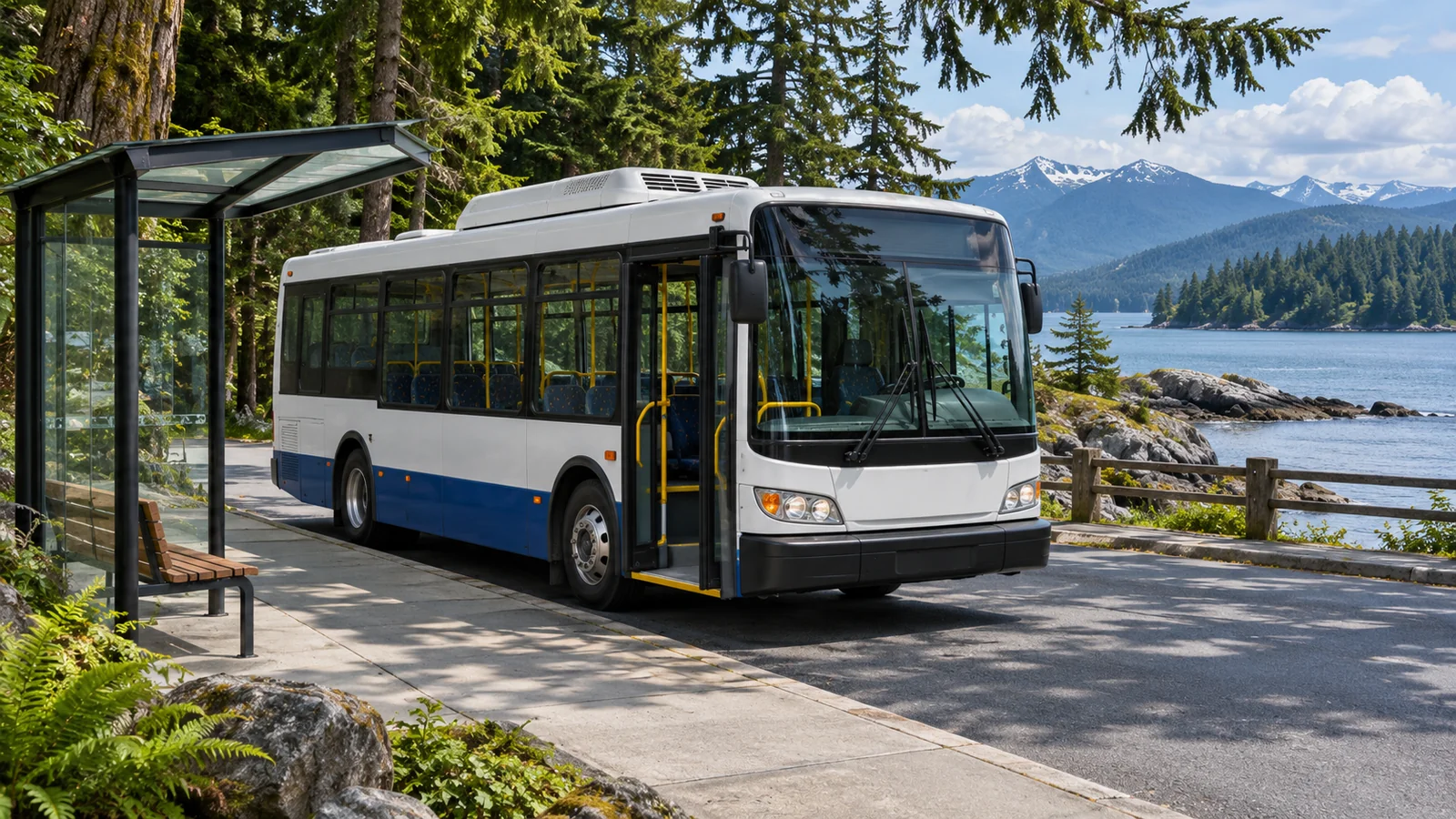
Start with the street address you need, then look up the closest practical stop in BC Transit’s Campbell River trip planner. Check the route number, direction and schedule for the day you’ll travel. Some buses serve the Community Centre area near Cedar Street and 11th Avenue, while others use the timing point at 16th Avenue and South Island Highway. Those are different places. If you’re going to a wildlife tour, check the walk from the bus to the marina and choose a trip that gets you there comfortably before check-in. Look up the return bus before you leave your accommodation.
Plan by address and stop
Use a full address for where you’re staying and where you want to go. A search for “waterfront” can give you a route to the wrong part of town. A hotel near the shore could be close to Willow Point, the marina or another stretch of Island Highway. Enter your destination, then compare the walking directions at each end. Take note of which side of the road you need to be on and where you can cross. BC Transit Campbell River routes and maps · City of Campbell River maps
Use the schedule for your date, then check the route map. A timetable may list several main timing points and omit smaller stops between them. If the published schedule does not show a time beside your stop, use the trip planner or BC Transit’s next-bus feature with the exact stop. Look for route alerts that affect where you’ll board. If you need to travel at a fixed time, give yourself room to find the stop and confirm it before the bus is due.
Save the route number, direction and stop name for both journeys. A stop near your destination may have a partner across the road, or the return trip may start from another stop on the same loop. If you’re using your phone, keep enough battery for the return trip. A screenshot can show you the planned stop if you lose service. Check live information again when you can, especially if you’re relying on the last bus of the day.
Use the published routes to find your part of town
The Community Centre timing point is shown as Cedar at 11th in BC Transit’s Route 3 schedule. Route 3 serves the Willow Point direction via Highway 19A. Route 1 lists a different path between Campbellton and Willow Point via Dogwood. Compare the route and walking legs for your exact address. The same destination label on two buses can hide very different routes between neighbourhoods. Route 3 schedule · Route 1 schedule
BC Transit’s Route 6 serves Oyster River and Willow Point and lists Erickson Road at South Island Highway among its timing points. This matters if you’re coming north from the Comox Valley. BC Transit’s interregional guide shows the regional connection at Oyster River and the onward Campbell River segment. Check what transfer you need to get from Willow Point to your final destination. Compare local and interregional fares before relying on a day pass for the entire trip. Route 6 schedule · BC Transit interregional connections
If you’re going to the central waterfront, use the destination’s official location when looking for a route. Discovery Pier sits beside Government Wharf and shares a visitor area with the Maritime Heritage Centre and Discovery Passage Aquarium. If you’re going to the Museum at Campbell River, use its separate address at 470 Island Highway. Once you have a route, decide whether it’s easier to ride for each stop or walk between two nearby attractions. Discovery Pier location · Museum at Campbell River location
Know how you’ll pay
BC Transit lists Umo, contactless payment and cash in Campbell River. Its fare guide says a single ride does not include a transfer. Check the current fare and consider a DayPASS if your route involves multiple buses or you expect to ride again later. A trip with two people may require two separate payment methods. Settle that before you get to the front of the line. BC Transit Campbell River fare guide
If you’re using contactless payment, BC Transit says the DayPASS applies after the second payment of the day when you use the same card or mobile wallet for each ride. Use that method consistently for the whole day. Each rider should use their own payment method to track their fares. If you’re paying cash, bring exact change and ask the driver for a DayPASS when you’re paying the pass fare. Keep the pass for later boarding. BC Transit contactless payment
BC Transit has a programme for children 12 and under to ride free. Check the rules for the age of each child in your group before you travel. If you have a stroller, scooter, bike or large bag, look up the system’s current rules as well. A few minutes spent checking the equipment policy can help you choose a trip when you have another way to get back if a rack is full or the bus setup doesn’t meet your needs. Children’s transit fares · Bikes and scooters · Strollers and bags
Take the bus to a wildlife tour
Eagle Eye Adventures lists Coast Marina, 1003 Island Highway, Unit D. Start from the meeting location on your own confirmation and use the required check-in time as the arrival deadline. Look up the bus that gets you to a nearby stop early enough to walk, cross the road if necessary and find the correct entrance. Discovery Pier and the Quadra ferry terminal are useful waterfront landmarks, but each has a separate access point. Eagle Eye Adventures marina directions
For a four-hour wildlife tour, plan the return journey before you leave your hotel. Start with the expected return time, add time to step off the boat and gather your things, then look up the walk and bus options. If the first suitable bus is a long wait, decide where you can sit or eat. If you’d be relying on the last bus, arrange a backup ride or choose a different tour departure. A local service may be useful in one direction even if the timing is awkward in the other. Four-hour wildlife tour
If your group is staying in two places, ask each person to plan from their own address and meet at the confirmed check-in point. A bus trip that’s direct for one person can require a transfer for someone staying elsewhere. Share the marina address and arrival time with the group. If someone misses a bus or turns up at the wrong stop, they’ll know where to head next.
Check how the bus and the walk work for your group
If you have a mobility aid, look at BC Transit’s accessibility guidance and check the stop and walking route too. Ask about boarding, available space and the type of device you use. Check whether the path between the stop and your destination has a slope, a curb or a crossing that matters to you. If a wildlife tour is part of the day, confirm the boat’s boarding and seating separately with the operator. BC Transit accessibility · Eagle Eye Adventures fleet
Give yourself extra time if you’re walking with young children or carrying groceries and layers. For a shoreline walk, choose a clear endpoint before you set off. Use a bus for one leg and walk the other if the route and weather suit. If the rain becomes steady or the group wants a shorter outing, choose a place where you can wait and check the return trip. A shorter walk from the stop can be worth more than a slightly earlier bus.
Try a simple trip before adding transfers
If you’re staying downtown, start with a trip that uses one bus or none. Pick a waterfront stop that’s easy to find and compare the walk with the bus schedule. You may be able to walk to Discovery Pier and save the bus for a trip farther south. When you want to get to Willow Point, look at whether your start and destination fit Route 3 or Route 1 and compare the walk at the other end. Eagle Eye Adventures guide to Campbell River
If you’re coming north from Willow Point for a tour, write down the time you need to arrive and select a bus one departure earlier than the last workable option if the timetable allows. Use that extra time for a brief stop near the meeting point. If you’re travelling back after supper, check when service ends before you choose where to eat. You may want a meal near the stop or an arranged ride back, depending on the day.
Plan a day that combines buses and walking
For a visit from Willow Point to the central waterfront, look up a stop near your accommodation and the Community Centre area first. Check how long the walk would be from the suggested stop to the pier cluster. Choose which attraction you’re going to first, then give that stop enough time before you plan the next ride. If you know you’ll want to stay for lunch or visit another venue, identify two workable buses back so you can choose once you’re there.
For a ride in the opposite direction, pick a specific Willow Point destination. A neighbourhood name can cover more ground than you’d want to walk with a bag or a child. If the bus puts you close to the waterfront but farther from a public crossing, compare it with another stop before deciding. Bring the amount of food and gear you can comfortably carry on that walk. Use the city map to find a public park if you want a rest before riding back. Campbell River city parks and trails
Check an onward connection separately
If you’re using a bus before an intercity coach, a flight or a ferry, look up the carrier’s address and boarding time directly. A coach may leave from a different stop from the city service. For an airport trip, check whether the planner offers a workable route all the way to the terminal or whether you’ll need to arrange a separate ride. For any timed connection, decide in advance when you’ll switch to your backup if the local bus is delayed.
Write the boarding cutoff as well as the advertised departure time in your itinerary. If the city bus brings you to the right area but only shortly before boarding ends, choose an earlier trip. Your last walk counts as part of the journey, especially in a town you’re visiting for the first time.
Will the weekday schedule work on a Sunday or holiday?
Check your actual date on BC Transit. It publishes separate schedule information for holidays, and a different trip may work on a weekend than on a weekday. If your plans span several days, save the correct schedule for each one. Recheck route alerts before travelling.
What should I do if the stop is moved?
Read the alert for your route and direction. It may give a temporary location or an alternate stop. Compare that location with the rest of your walking route. If a temporary stop means you can no longer make check-in, arrange a ride or contact the operator before you’re late. If you’re already out, take a moment to confirm the return stop too. The stop used by the other direction may be affected differently.
Can I use a bus for a short ferry wait?
Only if the next bus, the walk and the return fit your actual time before ferry check-in. For a brief wait near the Quadra ferry terminal, it can be easier to stay nearby. Use the bus when you have time for both directions and a fallback if a departure changes. Check the ferry’s own status and boarding instructions before walking away from the terminal. BC Ferries Campbell River terminal