
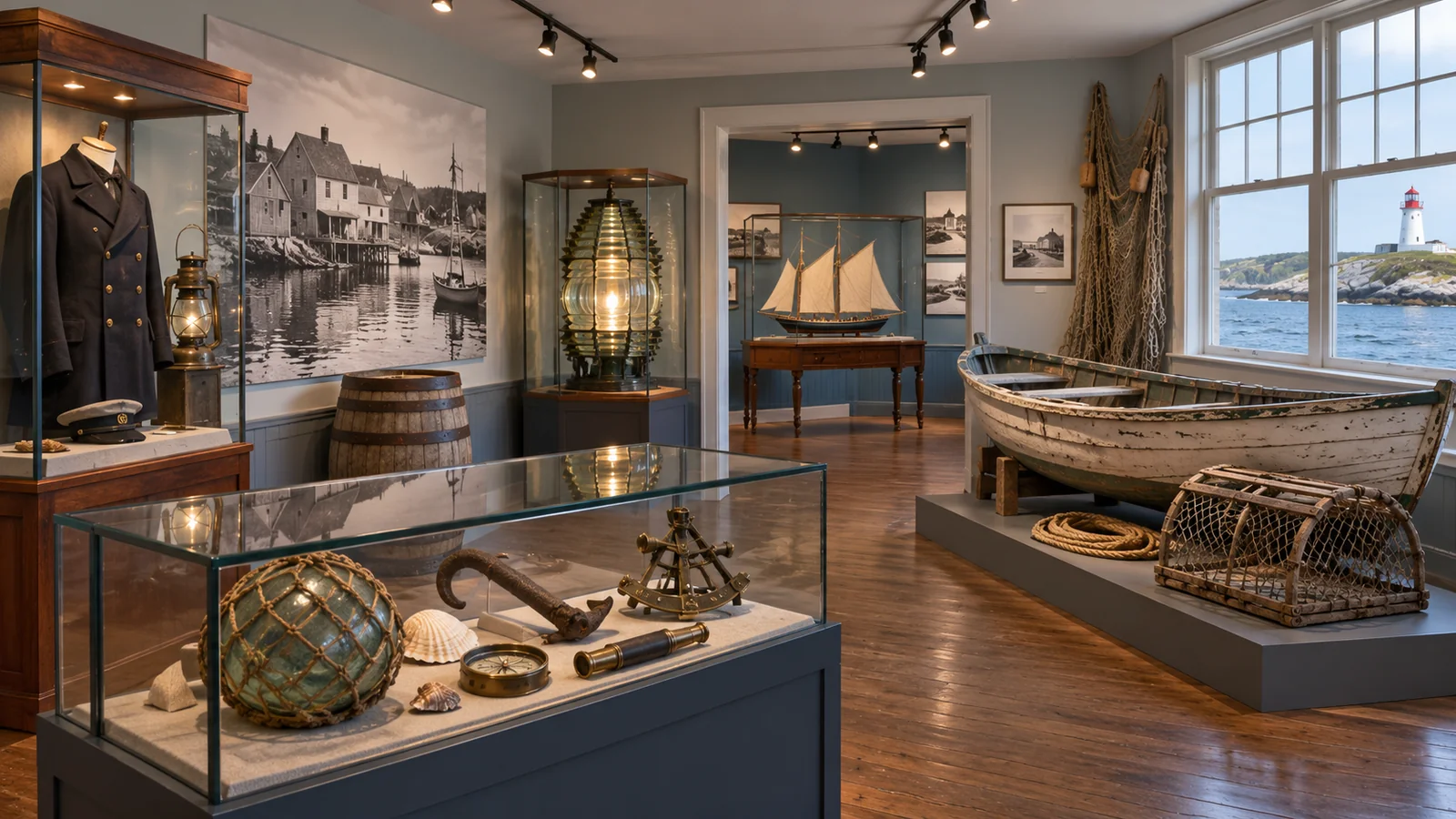
The Museum at Campbell River is at 470 Island Highway, at 5th Avenue. Start with the galleries that fit your interests, then leave time for the outdoor exhibits if you can. The museum covers the human history of northern Vancouver Island, including First Nations histories, logging, settlement and the ways people have lived and worked on the coast. Its website lists seasonal hours, admission and parking off 5th Avenue. Museum at Campbell River visitor information · Permanent exhibits
Check when to visit and which entrance to use
Use the museum’s full name and street address for directions. Its parking entrance is off 5th Avenue, and the museum lists free parking, washrooms, a picnic area and a courtesy wheelchair. Ask staff if your visit depends on particular arrangements such as a place to sit, a specific route through an exhibit or wheelchair availability. If you’re coming on foot, map the route from your accommodation or other waterfront stop before you leave. The Maritime Heritage Centre has a separate address and visitor schedule. Maritime Heritage Centre contact and hours
Check the dedicated hours page for the date you’re visiting. The museum publishes separate summer, winter and December schedules as well as holiday closures. The hours page also lists rates for adults, seniors, students, families and groups. For a group that wants a guided visit, contact the museum in advance. For a walk-in visit, ask which exhibits are open and whether any program or special event changes how you’ll move through the building.
Before you arrive, decide what a good visit would look like. A first-time visitor who wants to understand the region can spend time in two or three galleries and leave the rest open. Someone coming back with a particular interest in boats, art or logging can start with that subject and use the other exhibits for context. Check the museum’s current exhibit list if a temporary exhibition is part of your reason for visiting. Museum at Campbell River exhibits
Spend time in the First Nations and Transitions galleries
The museum acknowledges that it works on the traditional lands of the Liǧʷiɫdax̌ʷ First Nation, comprising We Wai Kai, Wei Wai Kum and Kwiakah First Nations. Its First Nations Gallery draws on collections from a wider region. Look at the display text for the name of the Nation, artist, family or community associated with what you see. That is a way to understand a particular object or work in its own context. First Nations Gallery
The museum identifies Max Chickite’s contemporary sculpture Raven Transforming at the entrance to the gallery. Use it as a starting point for noticing how works from different periods appear in the same space. Ask staff about the presentation schedule if you want to see The Treasures of Siwidi. The museum describes it as a light and sound presentation in a small darkened theatre. If darkness or sound is a concern for someone in the group, ask what to expect before entering.
Allow time for the Transitions Gallery. The museum says it covers difficult parts of regional history, including population loss, residential schools and marginalization. With children, read labels together and take breaks so they can ask questions. You can choose what to explore based on the age and interests of the group. The permanent exhibit list is a starting point if you want to prepare before the visit.
The museum prohibits photography throughout the First Nations Gallery. It explains that families have asked that photos of their belongings neither be taken nor shared. Follow the guidance at the gallery and check with staff about photography elsewhere. If there’s something you want to remember, write down a title, artist’s name or question you’d like to explore. Museum at Campbell River visitor FAQs
Follow the connections between fishing, travel and settlement
The Floathouse exhibit is a place to think about what home meant in an area where much of the travel was by water. The museum describes floathouses as portable homes that could move with work. Look at how the exhibit uses space and ask what a household would have had to carry or leave behind. If you’re travelling with children, ask them to choose which things they’d take and where they’d put them.
The Willows Hotel and adjacent sportsfishing exhibit give you two views of the same era. The hotel’s recreated façade and lobby show how a town served visitors and workers. The sportsfishing display includes purpose-built rowboats and fishing gear. Think about what makes a boat suitable for a particular job. Follow the museum’s separate commercial salmon fishing exhibit if you want to see how fishing for a livelihood shaped activity around the coast.
The logging gallery describes work in the area loggers called the Jungles, a stretch of islands, inlets and channels north of Powell River. Compare the geography with the equipment and the ways people moved logs. Outside, the steam donkey and 1930 Hayes-Anderson logging truck can give you a closer view of two different stages of that work. Use the museum’s exhibit information to connect the objects to where and how they were used. Museum at Campbell River outdoor exhibits
Take a closer look outside
The outdoor collection includes the Soyokaze, a cod fishing boat built around 1939 in Steveston for Shigekazu Matsunaga of Quathiaski Cove. Compare its shape and the space on deck with the rowboats in the sportsfishing exhibit if both are part of your visit. Read the museum’s account for the names and places associated with the boat and how it was used. It can give you a specific connection to Quadra Island if you’re also taking the ferry.
The Thunderbird Bear Pole and West Coast Garden are also on the grounds. The museum identifies the pole’s carvers as Bill Henderson with Junior, Greg and Will Henderson and describes how it was inspired by an earlier pole by Sam Henderson. In the garden, look for signs identifying plants and see which are in flower or fruit. These two stops lend themselves to a slower visit when the weather allows. Ask at the desk if you need information on outdoor path access before you head out.
Choose a theme if you have limited time
With a short visit, pick two exhibits that speak to each other. The Floathouse and commercial fishing displays can give you a sense of how people lived and worked in places connected by water. The logging gallery and equipment outdoors can help you see how technology changed a job. For a visit with someone interested in art, begin by looking for the makers and communities named on the labels, then check whether a temporary exhibition adds a work or story you want to spend time with.
With more time, leave room to revisit something after you see how it connects to another gallery. A boat or a piece of equipment can look different after you’ve seen where people lived, who built it or what work it made possible. If someone wants to take a break, identify a place to meet up and agree how much time each person wants to spend on their own. That gives people room to read at a different pace.
If you’re looking for historic photos or local family information, check the archives arrangements separately. The museum’s visitor FAQ says the Archives Research Centre is open by appointment. Use its online resources for a first look and contact staff about what you hope to find. An exhibit visit and an archives appointment are separate ways to spend time at the museum.
Connect the museum to the coast you’ll see outside
The museum’s exhibits about coastal travel and work make a natural companion to time on Discovery Passage. Eagle Eye Adventures offers a four-hour marine wildlife tour departing from Campbell River. Check the tour’s time and the Coast Marina location before putting both visits on the same day. Give the museum its own window when it’s open. If you go first, choose a time to leave for the marina. If you go after, allow for the return from the boat and a meal before the museum closes. Eagle Eye Adventures four-hour marine wildlife tour · Eagle Eye Adventures location
If you have time for another shore stop, choose one that gives you a different view. Discovery Pier offers a look across the passage, while a stop at the waterfront gives you a chance to think about the people and boats in the exhibits. Check access before visiting and give yourself time to get to your next booking. A day with a museum and a short waterfront walk can also work when you want to spend less time outside. Destination Campbell River Discovery Pier guide · Eagle Eye Adventures Campbell River visitor guide
What should I see on a first visit?
Choose a gallery about the region’s First Nations, then another subject you’re curious about. The Floathouse, sportsfishing displays or logging gallery offer different ways into the local history. If the weather is good, save time for the garden or the boats and equipment outside.
Give younger visitors a question to follow
Ask children to look for the object they’d find hardest to use. In the fishing gallery, they might choose something that takes two people to handle or an item whose purpose they can only guess. In the outdoor collection, they might look at how a machine’s size compares with something they use today. Help them read the label and talk about what skill the person using it would need. Repeat the exercise in another gallery if it holds their attention. For a family with younger children, an outdoor stop between galleries can give everyone a chance to change pace, depending on the weather and how the museum handles re-entry.
An older visitor interested in the region can follow the same thread through a few different subjects. Ask how people and goods reached communities when the shore and the islands were linked by water. In the Floathouse, look for clues about living space and the ability to move. At the Willows Hotel exhibit, think about what brought different visitors to Campbell River. Outside, follow the Soyokaze label to a named boatbuilder and owner. Each offers a way to ask who made an object, how it travelled and what changed when it reached a new place.
Decide when to add the grounds
If you arrive on a dry morning, take a quick look outside first. You’ll have an idea of what to return to after the galleries. In rain, you can start indoors and see whether there’s a break in the weather later. If you’re interested in the outdoor displays, check their locations and surfaces before setting out. Someone who wants to take time at a particular object can pick a place to meet the rest of the group afterwards. Bring a layer if the group will be standing outside together to read a display.
If your group includes someone who likes to read every panel and someone who prefers to see a few things, agree on a time to meet and a shared last stop. For example, meet by the garden after each person has visited the exhibits they chose.
Before leaving, choose one name or place from the visit to look up later. A label might send you to the museum’s historical photographs of the Discovery Islands or to its local fishing history. If you’re heading to Quadra, look up Quathiaski Cove in the photographs and see what details you recognise when you arrive. Museum at Campbell River historical resources
Ask visitor services about any exhibition guide you can take with you.